Tag Archives: reading

Review: King of Thorns by Mark Lawrence

As I’m powering through the final book, I thought it best to get onto the review of King of Thornsbook two in Mark Lawrence’s Broken Empire trilogy. Second books are tricky beasts, and on more than one occasion I’ve been burned by slow pacing, plot meandering, and character veering, so I tend to enter into that second book with a little trepidation (please be good, oh *please* be good).

But… Ah, King Jorg, such a gloriously grey character. Such defiance, such cunning, such dark fun.

Now before I get into the nitty-gritty of this book, there’s some housekeeping that needs doing. So in keeping with the grimdark and me writing reviews any way I please, let’s make this bloody:

HERE THERE BE SPOILERS. THERE, THERE BE SPOILERS. AND IF YOU’RE NOT WATCHING YOUR BACK, A SPOILER WILL SNEAK UP BEHIND YOU AND SLIT YOUR THROAT EASY AS YOU PLEASE. YOU HAVE BEEN WARNED.
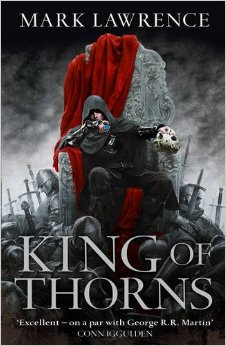
King of Thorns

I’m usually a little wary when beginning the read of the second book in a trilogy, especially when I’ve so enjoyed the first. What I tend to find is a rebuilding of the world, a rehashing of previous events and mansplaining the crap out of everything (totally unnecessary – give your reader credit, they have a surprising tendency to remember what happened, with like memory and stuff), not so with King of Thorns. Can I get a hallelujah? No? Too much?

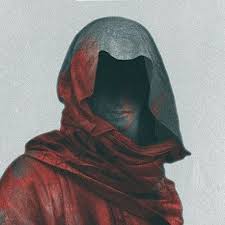
We’re thrown right back into the mix; into the words of Katherine, to be precise – the woman/aunt with whom Jorg is obsessed before making our way to his wedding to child-bride Miana. But with the Prince of Arrow’s legion now marshalled at the castle gate, this isn’t a happy day by any stretch of the imagination. Happy isn’t something Jorg is at all familiar with – happiness would be a weakness, and weakness is something King Jorg will not tolerate.
jorg

A hasty marriage ceremony is on the cards, and given Jorg’s distaste for bedding someone who is essentially a child, an even hastier ruse is contrived to show Jorg’s subjects the deed has been done. This is also where we get the first glimpse of Miana’s mind and strength, and with each of her appearances throughout the book, Lawrence unveils a little more of that intellect and crafty perception she holds – she’s quite the tactician. Something Jorg will soon come to value.

This book also keeps to the format of moving from past to present and back again in its storytelling. While it took me a wee bit to get into the gist of this with the first book, I slipped seamlessly into the rhythm this time round. This type of storytelling is difficult to pull-off, let alone successfully, but Lawrence manages it remarkably well – it forces (allows?) the reader to think, to wonder why Jorg does the things he does in the present before taking you back to give you clues and scenes to decipher. It’s something I value when reading. I don’t want to be hand-held down a garden path with the writer pointing out all I need to know and why – let me do some lifting as well, it creates the connection with characters I’m wanting.

Connection is something I’ve noticed some readers find difficult when it comes to Jorg. Not me. I have about as much empathy for Jorg as he has for himself, but I like the way he forges ahead with his goals, how he sacrifices much to achieve them. There’s something to be said for writer who creates a character that has little with which to empathise but with whom I find myself cheering on. Yes, even when committing deeds that seem totally sociopathic. Is Jorg a sociopath? There’s definitely evidence to suggest as much. Doesn’t make me like him less.
jorg 1

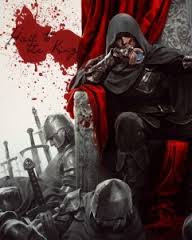
Jorg is again joined by Sir Makin and his Brothers (who are slowly and violently dwindling) and the monsters he’s collected along his travels – Gog and Gorgoth. Gog, ever the fire-child, does hold a special place with Jorg, but would you call it love? No. Gog is a kindred, while I believe Gorgoth is the conscious Jorg struggles to find. Both will suffer because of this, Gog more so, but that demise powerfully links the two, and Jorg will always have that puckered reminder staring back at him.

One of my favourite scenes is that within the marshes – the rising of the dead, all of them, and the confrontation with the necromancer, Chella. Here Jorg and the Brothers fight those they’ve killed, those who died with the Builder’s sun and even fellow brothers in various states of decomposition – it’s hard, brutal and unforgiving. I loved it!

(Psst! You gotta love a review where I get to use the words: monster, necromancer, decomposition and sociopath.) Here’s where we find out a little more of the Dead King, and that’s a showdown I’m very much looking forward to.

But Jorg is first moving steadily toward a showdown with the Prince of Arrow – the light to Jorg’s darkness. We’re taken back to their first meeting, and we’re shown the allure the Prince has; so much so that even Jorg questions his motivations to take on a man who even he would follow. The Prince of Arrow is a man of the people, looking to unite the empire and bring peace and bounty to all within. He’s a forward-thinker, and also the one who will marry Katherine. The two set up for a mighty future battle (yes, the one that take place on Jorg’s wedding day), but first, Jorg makes for the family he knows little about – his mother’s.

It’s here, upon meeting his uncle and grandparents (and ghost Fexler), that plans for this upcoming battle really do start to fall into place (while creating a new foe). And that’s one thing a reader cannot doubt – Jorg’s ability and determination to see things through, no matter the outcome, no matter the cost. Jorg gets the information and [redacted for spoilery moment] that will have him win this war. It’s also where we learn more about the Jorg’s world and the Builders that makes Lawrence’s Broken Empire so damn awesome (this is a revelation future readers need to make, and something I won’t spoil for them).
bloody handprint

We see the return of Jorg’s memory from that copper box he carries with him, and how madness really does ride side-saddle with him. But through it all, Jorg is a tactician’s tactician. And despite the shenanigans of dream-witch Sageous, Jorg remains true to his path to the throne, albeit sometimes wandering off-path to deal with those who threaten his rise or to find… stuff… that will aid him in that battle.

Katherine plays a far greater part in this book, although most of what we discover about her is told through journal entries. We see her develop some interesting yet dangerous talents with regard to accessing her dreams and moving through them. We’re given greater understanding of the Prince of Arrow (Orrin) and his sullen brother Egan, and slowly, slowly the layers are peeled away and all are shown the truth.

It’s this final scene, this final battle between King Jorg and the Prince of Arrow (will not spoil this revelation either) and Jorg’s ensuing internal battle where Lawrence really delivers some killer blows. While I saw that spoilery bit coming just moments prior, it didn’t lesson the appreciation of the delivery; same with the big burn baby burn!

Lawrence didn’t take the easy way out here with this second book and use it to solely set up the final book. There are twists and turns; a subtle leading and plot punches to the face; there’s death on the tiniest but most powerful of scales (that’s a hint, not a real spoiler) and deaths bordering genocide. All of it woven with a delicate hand that drags you in and makes you see life in this world for what it is – not at all pretty. That this is told from Jorg’s point-of-view, one who doesn’t pretty-up the world, its people and their action, only makes this a more compelling read.

We’re introduced to new characters and we watch others die, usually violently, but anyone who says that’s a surprise is kidding themselves. This is as dark a book as was the first, which makes me a happy reader and more eager than ever to get stuck into the final book.

On a Goodreads scale, I give King of Thorns 4.5 stars.

Four and half stars


Review: Prince of Thorns by Mark Lawrence

Without incurring the wrath of the Jinx Faerie *invokes sign*, my reading for pleasure is going well this year, and it really has been pleasurable reading. While I have a few other reviews to write, I’m jumping ahead here with Prince of Thorns as the book is still very fresh in my mind.

This is the first of Mark Lawrence’s work that I’ve read, and I want to thank my pal, Tracy, for nudging me toward it. Prince of Thorns is the first book in the Broken Empire Trilogy and sits well within the ‘grim-dark’ of fantasy, and it’s a sub-genre in which I’m happy to spend a lot of time. For those of you unfamiliar with the term, ‘grim-dark’ is, as it sounds, a story that is grim and dark in tone and doesn’t shy away from the realities and brutality of such themes. Lawrence hits the ‘grim-dark’ mark with Prince of Thorns.

prince-of-thorns

Now before we get into this, it’s spoiler-alert time, now while I haven’t gone into too great detail with the plot (this really is something you need to experience in all its awful glory), I’m warning you all the same:

SPOILER ALERT: *clanging of bells; blaring of sirens* READ ON AT YOUR OWN RISK. REPRISALS WILL OCCUR TO ANYONE BITCHING OR COMPLAINING ABOUT READING SPOILERS. (I have an angry cat and I’m not afraid to use him. Grim is his name, and he lives up to his moniker.)

Prince of Thorns is told from the first-person point-of-view of main character, Prince Jorg Ancrath, heir to the kingdom of Ancrath, we begin in the aftermath of a village plunder. Right from the outset the reader is plunged into the blood and death that surrounds Jorg, and it’s unapologetic in its telling – as it should be. The first surprise for me, which came at the end of the first chapter, was Jorg’s age – just shy of his fourteenth birthday, his savagery is something a reader would expect in one much older.

Jorg has been on the road with his outlaw ‘brothers’ since he fled from his father after an ambush that killed his mother and younger brother. Jorg, held firm within the thorns of a hook-briar, could do nothing to help his mother and brother, nothing except watch. The betrayal by his father to not seek vengeance on the man who orchestrated the ambush, pushes Jorg to seek vengeance on the mastermind on his own.

Slowly, the story unravels, but just when you think you have a hand on what’s at play, Lawrence manages to turn it on its head, and does so adeptly. There are connections with everything, foreshadowing done so well that it’s not until a revelation appears that those connections shine through.

The cast of support characters, especially Jorg’s band of brothers, are a motley crew, and by ‘standard’ fantasy tropes, not a good one amongst them (apart from Sir Makin and the Nuban – both favourites of mine), but in keeping with the grim-darkness of the book, they’re a perfect fit for not only Jorg, but the story as well. These are interesting, quirky, yet disturbing characters that I was more than happy to get to know better.

But it’s Jorg who commands the story here, and while he embraces the doing of evil deeds with much gusto and little-to-no conscience, there’s an honesty about him I liked. Hell, I was rooting for the kid the whole way. With Jorg, there’s no half-measures, and in a story such as Lawrence’s, there can be no half-measures, for those who lack commitment live very short lives and tend to die horribly.

bloody handprint

Jorg is driven by the murders of his mother and brother, but there’s more at play in Jorg’s choices and ‘non-choices’ than meets the eye – another revelation that sat well with me. Magic – there is much of it – and yes, dark magic it is. You expected different? And the monsters, aaah, the monsters, they’re plentiful and unique – the scenes that take beneath Castle Red are some of my favourite. Gog, you scamp!

There’s a revelation in this section (no spoilers – it’s well worth the wait) that puts a lot of Jorg’s… learning into perspective – at times I was pulled toward the alternate-universe theory, but this revelation was punched right out of me and I was glad for it.

Right from the beginning you know, Jorg is bound for home, for a confrontation with his remarried father. Another queen sits on the throne, one who bears the king’s preferred heir. Jorg, torn between present and past, finds himself vulnerable in ways he hasn’t been for four years – a dangerous place for him. He’s a wily fellow, Jorg, resourceful and ruthless, and the more I read the more I liked this ‘wholly unlikeable’ character. That’s the thing, I can see why some would find him unsympathetic, soulless, reaping of all that befalls him, but for me… well I liked him. Is he a sociopath? Odds kinda head that way. Is he a monster? To those who get in the way of his goals, yes. Or, is he a product of his environment and history? Aren’t we all. And it’s that honesty, the not shying away from the darkness that lives inside Jorg that makes him wholly likeable for me.

The structure of the storytelling took a little getting used to as Lawrence jumps from present to past and back again often during the storytelling – but this is clearly marked by the different fonts (and the fact it’s signposted: Four years earlier). It’s also how Lawrence gives you the breadcrumbs to Jorg’s story, his history, and the why of his nature.

I have the next instalment of The Broken Empire Trilogy – King of Thorns, and I’m very much looking forward to seeing where Lawrence takes Jorg and his ever-dwindling band of brothers.

For those who are looking for more standard fantasy fare, this might not be for you. And for those who don’t like the blood, gore, death and torture that comes with war, then this probably isn’t the book for you either. But if you’re looking for a story that doesn’t shy from the vulgarities of conquering lands and kingdoms, that is as dark as it is twisted, and has characters who have less redeeming qualities than those you find in most fantasy epics, then this is definitely the book for you.

On a goodreads scale, I give it 4.5 stars.

Four and half stars

Review: Bloody Waters by Jason Franks

I’m a wee bit behind on my reviews as I read like a fiend through January… then life laughed and laughed and laughed at me (I also believe it gave me the finger) when I wanted to keep the pace through February.  Sooo, without further ado…

*taps microphone* Check, one, two… One, two.

Welcome to the stage… Bloody Waters!    *crowd goes wild as Clarice Marnier strides on stage with Motherfucker*

Bloody Waters is Jason Franks’ debut novel released through Possible Press, and a damn fine debut it is. This is the first of Franks’ work I’ve read, and as with any book, you go into it with excitement and a little trepidation: ‘please be good, please be good…’

Well it wasn’t good – it was fan-freakin’-tastic.  Now before we go any further, I’d better put the requisite spoiler warning in…

SPOILER WARNING! THAT’S RIGHT. SPOILERS. LIKELY LOTS OF THEM.  SPOILERS I MEAN. SO READ AHEAD AT YOUR OWN RISK, ‘CAUSE, YOU KNOW, SPOILERS.

Bloody Waters

The story begins with the a chat between an old bluesman and the devil at a crossroads (think Robert Johnson folklore) and the horny dude’s warning of ‘rock and roll badness’ on the horizon. The devil is worried, you see, and the bluesman tells him ‘rock and roll boys ain’t nothin’ to concern himself with.’ The devil agrees, ‘but this one’s a girl.’

It’s the … quirk in the supernatural I really found enjoyable. Satan? He’s a character who holds his own here, and the interactions between him, Clarice, and Clarice’s boyfriend, Johnny, were some of the highlights of the book for me. Kudos to Franks on the great dialogue. But I’m getting ahead of myself.

Bloody Waters follows the life and times of guitar virtuoso, Clarice Marnier.  There’s nothing Clarice wants more than to be a rock guitarist, and when Clarice sets her mind to something, nothing (and I mean nothing) will stand in her way.  She’s focused, forthright, stubborn and proud – she’s a pretty kick-arse character who can actually kick your arse. And seriously, anyone who names one of their guitars ‘Motherfucker’ is alright by me.

You see, no one knows guitars like Clarice, and no plays guitar like Clarice. She has a single-mindedness that sometimes comes across as arrogant, but it didn’t take me long to realise that her no-nonsense attitude is what makes her… Clarice. Oh, and keep an eye out for her one-liners and terrifically and sometimes groan-worthy puns – they’ll put a smile on your face.

After being blacklisted by the music industry, Clarice seeks out band members to form ‘Bloody Waters’, a band she knows is the best out there, but no one will touch them. So Clarice, with the help of boyfriend and frontman, Johnny Chernow, make a deal with the devil for a second chance at taking the world by storm.

And storm the world they do. No band is bigger; no guitarist is better, and no one wants to bring them down more than the music industry that spurned her.  Ensuing battles with demons, wraiths, witches and all other manner of supernatural nasties, then throw in some gangsters, other rock bands, crazy fans and you’ve got one hell of tale taking place on the pages. Most of the supernatural takes place toward the second-half of the book, but there’s no end to the magic that rips through the story.

While Clarice is the star of the book (and the band), frontman Johnny Chernow really does hold his own in this book, and holds his own against the force of nature that is Clarice. He’s also one of the most easy-going warlocks about – nothing much rattles his cage. Without Johnny, a lot of what Clarice can achieve on the supernatural level would be impossible, and while I would have liked to have seen some more…tenderness toward Johnny on Clarice’s part, the final revelation makes you understand why she is the way she is.

pentagram

There’s a lot at play in the novel, but Franks’ works well to not only keep the reader hooked but also guessing as to what’s really going on. The interactions with the Devil always hint at some ulterior motive (no real surprise there, he’s the Devil, Father of Lies and Deceit), and he has an almost soft spot for Clarice, but always at the back of my mind was the crossroads talk with the bluesman at the beginning of the book.

But it’s the revelation at the end of the book I didn’t see coming, and one that was so brilliantly thought out and delivered, it had me reflecting on it for quite a long time afterward.

The only negative I found with my copy of the book was that it could have been edited and proofread with a more expert eye. There were more than a few typos and grammar issues that should not have slipped through. However, the standard of the story and the storytelling itself made this (almost) easy to overlook.

Franks takes the reader on a fast-paced ride filled with black-humour, bloody battles, and a look at ideology from an altogether different standpoint.  His characters are well-fleshed out, engaging, and were perfectly suited to the parts they played. I flew through this book, so engaged was I with the story and the characters. I sat up ‘til 3am to finish it, and if that isn’t the sign of a good book, I don’t know what is.

On a Goodreads scale, I give it five stars. And no, the devil didn’t make me do it.

five stars

 PS. Check out Jason’s comics/graphic novels — they’re well worth the look.

Horror and Writers and Interviews, oh my!

This February marks the 6th annual ‘Women in Horror Month’. Started by Hannah Neurotica, WiHM aims to: [assist] female genre artists in gaining opportunities, exposure, and education through altruistic events, printed material, articles, interviews, and online support. The vision is a world wherein all individuals are equally given the opportunity to create, share, and exploit their concept of life, pain, and freedom of expression.

I have mixed feelings about WiHM, but I understand the need for its existence (this will be the subject of a post later in the month). I will always support authors – especially in my genre – and particularly female horror writers. Hell, I am one. Pay it forward and pay it back; karma will always be good to you.

I’ve received a lot of support from horror writers and readers, and I’ll be forever thankful for it. One of those who helped me enormously at the beginning of my writing career was the extraordinarily talented and supremely wonderful Kaaron Warren – one of the best horror writers about, no doubt.

I was lucky enough to be mentored by Kaaron, and what she taught me I will never be able to repay – her knowledge of storytelling and the industry was priceless. She was always there to look over my work (no matter how nervous I was) and answer any questions I had (no matter how ridiculous they may have been). I hope to one day help others as she did me.

WiHM 2015

Support comes in all forms, and I was the beneficiary of said support from the very talented Greg Chapman when he asked to interview me for WiHM. His questions were insightful and ones that deserved to be delved into. Not only that, I was interviewed along with Kaaron, which was like the icing on the cake for me.

The interview is here, and you’ll see that I’m far more ‘chatty’ than Kaaron – she really does know how to get to the heart of things succinctly! Our interview is part two of a series Greg’s doing. You’ll find part one here, where he interviews Marge Simon and Stephanie M. Wytovich – two very talented author/poets from the United States.

Greg asks us all which female horror authors we believe should be read, and if for nothing else, take a look at the lists the four of us offer – they’re wide-reaching and wide-reading.

So if you’ve never read horror written by a woman, or would like to read more horror written by women, check out Greg’s interviews.

Right then, time for me to get back to destroying a world of my own making. Horror writing really does rock!

 blood spatter

2015? We Need to Talk…

Aah, 2015, how’d you arrive so quickly? Well you’re here now, so let’s get one thing straight, I have some damn high expectations forthcoming, so if you could not rush through this year as you did the last, that’d be great. Not that 2014 sucked by any stretch of the imagination, but I’ve set goals (note: that’s goals not resolutions) that I will reach, and strict regulations on my family/work/writing time management.

2014 was very business-oriented, with most of my time taken up with editing – don’t get me wrong, I love what I do; working with other authors… there’s not a lot that beats that!. This year, however, I will be much stricter with my working hours and my ‘no working weekends’ policy.  Still, business is good, and the authors I worked with last year were most inspiring. Writers rock!

I also had the pleasure of being a co-editor on the SNAFU series with Geoff Brown, the owner and editor in chief of Cohesion Press. SNAFU: An Anthology of Military Horror, and SNAFU: Heroes have both been released to strong sales, but more importantly, kick-arse reviews. SNAFU: Wolves at the Door, will be released this month, and as with the other SNAFU anthos, there are some truly amazing stories within, both from established writers such as James A Moore, and some new writers you definitely need to keep an eye on.

SNAFU Wolves

As for last year’s reading (I’m talking for pleasure, here, not work), I kicked 2013’s arse. Twelve novels and two short story collections, which I plan to beat this year as well. I’ve a review coming for the last collection I read, and am already well into the first novel for this year.

Writing wise… well, this had to take a bit of back-seat. I finished the script for for my comic, ‘The Road’, and the uber-talented Monty Borror has finished the art – I can’t begin to put into words how Monty has captured my vision for the comic, only to say that I am extraordinarily humbled as well as mind-blown by the man’s work. Lettering will begin soon, and the comic will be launched at Melbourne ComicCon in June through Cohesion Comics. (Watch out Melbourne, here I come! Ahem…)

road page 29

I wrote one short story last year, which was short-listed for a pro-paying market (that’s a win for me), but most of my writing was taken up with the first draft of my novel. Things there are progressing a lot slower than I’d like, but I have plan, and six weeks to get it done. And get it done I will. Then it’s rewrite time! I’ve also set a short story goal of four for the year, all to be subbed to pro markets. (See 2015? Goal-motivated  – don’t be screwing with me and start messing with time.)

So 2015, I’m taking no prisoners and you’d better be on board. Don’t make me get all stabby with you.

Review: ‘last year, when we were young’ by Andrew J McKiernan

Why yes, it is review time again. Today’s review is brought to you by me, with reading material supplied by Andrew J McKiernan. And I thank him for it. Now before I go on to explain how wonderful these stories are, it’s disclaimer time:

I’ve known Andrew for a good few years, and is part of the awesome Sydney SHADOWS – a mad crowd of Sydney writers who get together for lunch and drinks and shenanigans and drinks (Fat Yak! Ahem. As you were…)

Right then, with the disclaimer out of the way, it’s spoiler alert time…

READ ON AT YOUR OWN SPOILERY RISK. MANAGEMENT IS NOT RESPONSIBLE FOR SPOILERS IF YOU READ PAST THIS POINT. SERIOUSLY, IF YOU READ PAST THIS POINT THEN BITCH ABOUT A SPOILER, I’LL WHACK YOU WITH THE BOOK.

I love short stories. I love writing them and I love reading them. Collections and anthologies are always a kind of crap shoot – you don’t know quite what you’re going to get, you just hope there’s at least a couple of gems inside. There’s an undeniable skill in being able to tell a complete story within a limited amount of words, and not everyone can do it. Andrew McKiernan is one of those writers who damn well can.

‘last year, when we were young’ is the first short story collection I’ve read this year, and it’s also McKiernan’s first short story collection. Put out through the Australian small press, Satalyte Publishing, this is a collection of extraordinary moments set mostly against the ordinary, where the everyday lives of everyday people, are thrust into the twisted and bizarre.

LastYearSample

The collection contains sixteen short stories, five of which I’d previously read (and proudly published one as co-editor of Midnight Echo, Issue 8 – ‘They Don’t Know That We Know What They Know’ – it’s a cracker of a tale, full of tortuous moments and killer mysticism). There are also two original stories in the collection, and they’re two of my favourites, but I’m getting ahead of myself, so let’s start by talking about the writing.

There’s a beauty in the way McKiernan uses words, how he weaves patterns with those words to tell a story, and it’s apparent from the first tale. The Memory of Water is a story of loss, fear, regret and longing, and McKiernan grabs you as much with his wordsmithing as he does with the story itself: ‘The ocean as some intelligent mother from whom we had all crawled – finned and gilled, gasping for air – and for whom we still owed reverence.’   

It would take forever for me to go into each and every story within the collection, so I’m going to go with those that most struck a chord with me. Though it’s difficult to pick a favourite, when I sit back and think on the stories, it’s always ‘Last Year, When We Were Young’, to which my mind keeps returning. It’s one of the original stories, and also the last in the collection; it’s also what the cover art is based on (which is another of McKiernan’s artistic pieces).

This story messes with your mind, in a totally good way. It makes you think, and there’s not much better than a story that makes you sit back and reflect. I so want to divulge the wonder of this story, but this is one best enjoyed without any spoilers. It really is a beautifully sorrowful tale of love, friendship, hope and hopelessness.

Keeping with the religious piety, A Prayer For Lazarus will have you rethinking humanity, religion and what some will do for those they love – not all of which is good, mind. But hey, madness is its own religion, no? Told from a child’s perspective, and in a child’s voice, there’s innocence in the horror, and that juxtaposition is one of the things that sets this story apart.

bloody-cross

The Desert Song is another that resonated with me, and as with a number of McKiernan’s stories, there’s a base of organised religion pitted against the ‘pagan’ and ‘insurgent’ belief systems. Set after an indeterminate apocalypse, a town struggles against an uprising of the creepy that sends most to madness. Definitely one of my top five of the collection.

While I don’t read a lot of sci-fi, The Wanderer in the Darkness, sits firmly within the genre, and dragged me in from the beginning and ignited that wariness, that fear of what lays beyond the stars. And according to McKiernan, it’s some scary, scary shit. There are some very spooky Cthulhu overtones in the monsters he’s created, and that can only be a good thing, right? Right?

The last story I’m going to mention here is White Lines, White Crosses. We’ve all seen those memorials at the side of the road, marking the final spot a final breath was taken – dead or dying flowers and white crosses. McKiernan delves into the story, the legend behind the white crosses that dog a small Australian town. It’s a tough, no-pulled punches tale about the believed invincibility of youth and the truth of reality… two very different realities. It hits hard.

Not all of the stories grabbed me, mind. Calliope: A Steam Romance, left me feeling a little flat, which is odd, as I love steampunk, but… *shrugs*, it just wasn’t for me. But that’s just one story out of sixteen, and if that isn’t the mark of a great collection, I don’t know what is.

On a Goodreads scale, I give ‘last year, when we were young’, five stars.

five stars

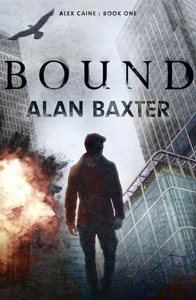
Review: ‘Bound’ by Alan Baxter

Yep, it’s review time again! Bound by Alan Baxter, is the tenth book I’ve sunk my teeth into this year, and that may not seem a lot to some, but when weighed against my work (which entails a tonne of reading) and my own writing, I’m doing pretty damn well.

So, in keeping with my reading of Aussie authors, Alan Baxter’s tome had crept its way to the top of my ‘to read’ pile. Now before we venture much further, this review comes with a disclaimer: Alan is a mate; we’re both part of a group of spec-fic writers (big up Sydney SHADOWS!) who get together as often as we can — but never often enough — to discuss all things writing and books and comics and life and stuff while we drink copious amounts of Fat Yak (but that’s a story for another day).

With the requisite disclaimer out of the way, now comes the requisite spoiler alert:

<insert Dalek voice here> DANGER! DANGER! SPOILER ALERT! SPOILER ALERT! DANGER! DANGER!

Bound is the first book in Baxter’s ‘Alex Caine’ trilogy, published through Harper Voyager. I’m familiar with Alan’s shorter works, so I was looking forward to reading one of his longer pieces. Bound introduces us to Alex Caine, an underground fighter (think MMA) with an uncanny ability to ‘read’ his opponents moves before they’re delivered. He does this via what he calls ‘shades’ (Magesign), and it’s made him top of his game. A usually solitary figure, Caine gets himself into some trouble from a local Sydney ‘gangsta’ (I’ve always wanted to write that word), and with the timely visit from an Englishman, Welby, who knows Alex’s secret, the adventure begins.

Caine-Bound-book-page

To avoid the veritable shitstorm coming Caine’s way, he accepts Welby’s invitation to travel to London. This is the beginning of Caine’s globetrotting quest, and an introduction to a world and magic and “people” (Fey), he never knew existed. Caine is somewhat of a ‘savant’ when it comes to the magic he possesses, and the Fey-world into which he’s been thrust is hard and unforgiving.

Welby needs Caine to decipher an ancient book no one (Fey or Kind) have been able to unlock. From here, things go from bad to worse then worserer (yeah, I said it). The book ‘Uthentia’ holds the remnants of an ancient Fey-godling that wants nothing more than to return chaos to all worlds – human and Fey – and no matter how much Caine wants rid of the book, it’s hitched its trailer to him. Add in the shards of a magical stone (on which his quest balances), Caine is in some serious shit. He’s a conduit, one who’s trying to conquer the bad mojo for survival. Not just his, but that of the worlds.

Baxter’s tale is fast-paced, and the magic he’s created is interesting, and something of which I wanted to know more. He touches on the monsters of popular culture and myth alike, which, for me, only placed me more solidly in Baxter’s world. He also take the writer credo: ‘write what you know’, to heart here. A kung-fu instructor himself, he’s incorporated the fighting skills and lessons of his sifu to see Caine through his quest and internal battle with the magic that’s ‘bound’ itself to him, and you can see that in the believability of the fight scenes.

Caine isn’t alone in travels. A half-Fey, Silhouette, has taken a shine to him, and Caine falls hard and fast for her. I was a little worried Silhouette was the ‘requisite love interest’, but she holds her own, and doesn’t shy from who she is and what she needs to do to survive. Something she doesn’t hide from Caine either. Theirs is a complicated yet strikingly honest relationship (regardless of the secrets each needs to keep).

The two make a formidable force, as do the antagonists in this tale – (the fantastically tuckerised) Hood and Sparks. Nasty pieces of work, both. But well placed against Caine and Silhouette. There are shades of grey through all the characters, and that’s something I liked most about this tale.

blood spatterThere are sections of this story that those with weaker stomachs when it comes to fiction, might have trouble reading. If vivid violence, rough sex, and a shitload of swearing aren’t your cup of tea then this might not be the book for you. But creativity is meant to push boundaries, to take us places that make us wonder at what humanity really means. What’s that saying? ‘Art should comfort the disturbed, and disturb the comfortable.’ Baxter does this well while providing a hell of a story to boot.

My only concern is that with such a fast-paced, action-packed first book, sustaining this through books two and three, and upping the ante, might make this a hard act to follow. I’m looking forward to the ride, though, I gotta say.

I’m a bit of a hard taskmaster when it comes to star ratings (you need to really earn a five star from me), and while it took me longer than I wanted to read Bound, it was more that I’m extremely time-poor, than a reflection on the story itself. I didn’t want to put this book down, and I hankered to get back to it (Baxter’s “monsters” are pretty damn awesome), but real life and a tonne of work has a habit of imposing itself on my leisurely pursuits.

So, on a Goodreads scale, I give Bound 5 stars.

five stars

Review: ‘Davey Ribbon’ by Matthew Tait

Woo hoo! It’s review time again! I’ve been going strong with my reading of Aussie writers this year, and Matthew Tait is the next Australian author whose work I’ve had the pleasure of reading. As mentioned in previous reviews, the Australian spec fic community is a close-knit one – the horror community, more so. Yep, you guessed it, this review comes with a disclaimer. I know Matt quite well, you could even say we’re buds. We have a mutual love of Clive Barker, and horror as a whole. I’ve never worked with Matt on any of his projects, so when I purchased Davey Ribbon, it was as a reader (and to support the work of Aussie writers, of course).

Alrighty, with the disclaimer out of the way, the next order of business is the spoiler alert:

SPOILERS ABOUND WITH ABOUNDING ABOUNDEDNESS – DON’T BLAME ME IF YOU READ ON AND HAVE AN ‘AWW, SHE SPOILED THE STORY WITH ABOUNDING SPOILERS OF ABOUNDEDNESS!’

davey ribbon


Davey Ribbon (released through HodgePodge Press) is the first of Matthew Tait’s work I’ve read, and if this is the mettle of what he has to offer, then I will fast be rectifying this fact.

Let’s begin with the cover art – yes, I know the old adage ‘You can’t judge a book by its cover’ but as someone who works both sides of the desk, aah, yeah, I do (if you’ve got crap cover art, I’m gonna assume—rightly or wrongly—the words inside aren’t going to be much better). No problem here with Davey Ribbon; the cover art is as hauntingly eerie as it is beautiful.

The story begins in the past, 1969 to be exact, where Angus Fisher has stumbled upon the murder of a child – Sarah Capeshaw – in the middle of the forest surrounding Cyclone Cove. Angus is in dire straits; the murderer, Reginald Avery, won’t have any witnesses to his crime. As Angus begs, reasons, yells for his survival, in strolls Davey Ribbon, a child-savant with a love of ribbons (which trail behind him wherever he goes).

Things go from bad to worse, and while I won’t spoil this scene (it really does deserve to be spoiler free), it’s this dark past that will come back to bite Cyclone Cove and its residents on the arse.

Fast forward to the present day, and Davey Ribbon has become the stuff of urban legend, but there are those within Cyclone Cove who will not let the past die. Cyclone Cove is reminiscent of many a small town with secrets (think Stephen King’s ‘Derry’, from IT), and when you add in a huge conglomerate that has come to the Cyclone Cove as its “saviour”, things aren’t going to end pretty.

We’re slowly introduced to those townfolk who will become major players in the story’s finale, and Tait does well to weave the many characters within the story, although there were, at times (about midway through), where I began to wonder whether I could keep the characters straight in my head. With the twins (Beatrice and Michelle), their religious-nutter mother (Patty), their babysitter (Miriam), the head of the cult-conglomerate (Samara) and her boy-toy (Nathan), the town’s recluse (Norman Perks), renowned musician (Jerry), returned resident (Sean), town cop (Bill), Samara’s acolytes, pub owner… and those characters from the past.

It’s a big character list, but this is a small town, and there are a lot of things at play behind the scenes and from the past that sit like a volcano beneath Cyclone Cove. It’s not a matter of will the eruption occur, but when.

DAVEY005

This is a story of secrets – everyone has them – and the biggest secret of all is Davey Ribbon. As with any urban legend, it differs in its telling, growing more macabre. Tait works the legend and the secrets well, giving the reader a little more then a little more as the story slowly unravels (and the townsfolk with it).

The crux of this story revolves around the book’s namesake – Davey Ribbon – who begins to show himself to those who have been chosen to fight the big fight. But Davey isn’t the only one behind the scenes pulling the strings. While Samara Reagan and Norman Perks are working overtime and double-shifts to bring Davey into the now (each with differing agendas), there are those within Cyclone Cove who are the puppets for the puppeteers. Each of the players in this finale have only pieces of the puzzle, as does the reader, and I enjoyed trying to figure out what was going on as the characters’ did.

From about midway, though, I began to wonder when Angus Fisher would make a reappearance – Tait does well with his misdirection, and when all is revealed, I was able to look back and see the clues – whether other readers will see it before I did, I’m not sure; if they don’t, will they feel cheated with the misdirection? I can’t say.

The ending of the story was brutal, bloody, and over a little too cleanly. I like messy endings – I don’t mean blood and gore (although huzzah on that point), but rather I don’t want to have all the answers. Tait doesn’t give us everything, and if I have one misgiving about the telling of this tale, it’s the chapter where the survivors – those who truly know what happened that fateful day – get together to try and figure out what exactly happened and why. Personally, as a reader, I’d rather ruminate on that myself. I was given enough within the confines of the story and the ending to make those connections.

All in all, this was a strong story with a great premise that was delivered in an engaging and sinister way. It isn’t shy in its brutality, and it doesn’t hold back when tackling themes some find disturbing. A special mention goes out to the editor of HodgePodge Press – this was one of the cleanest reads I’ve had in a while, thank you!

On a Goodreads scale, I give Davey Ribbon 4.5/5 stars.

Four and half stars

Review: Carnies by Martin Livings

After the controversy of my last post (yeah, I poked that bear), it’s review time again! And yes, that sentence deserved a ‘screamer’. I’ve read eight novels so far this year, and while that might not be a lot for others, compared to last year, I’m killing it. As an editor, I read a lot — flash fiction, shorts, novellas, novels (in all genres) — but that’s a different kind of reading; approached in an entirely different way. Reading for pleasure, where I can disengage the editor in me and just immerse myself in a story and sidle up to characters, is something I’ve really missed.

So I’ve dived back into my mammoth ‘to read’ pile, and Carnies by Martin Livings (published through Cohesion Press) was at the top of said pile. As with the last couple of reviews, this one also comes with a disclaimer. The Australian spec-fic community is a small and close-knit one – if you don’t know someone, you know of them. Martin is a friend of mine (and all ‘round nice guy – he loves cats), and we’ve also had short stories appear in the same publications. I soon became a fan of his short works, so I was very much looking forward to reading a longer piece. But before we go any further, it’s spoiler alert time:


HERE A SPOILER, THERE A SPOILER, EVERYWHERE A SPOILER, SPOILER!

carnies


The title alone tells you we’re heading into carnival territory, and I was hoping this was going to be an old-school carnival with all its oddities and ‘freaks’ that had a more… otherworldly feel to it than the almost antiseptic feel of what passes as a carnival today. I wasn’t disappointed.

Carnies follows the story of brothers David and Paul Hampden. David, a journalist in a spiralling career, has gotten wind of a creepy carnival in country Australia that might just revitalise his career. He enlists younger brother Paul, a sometimes photographer, to join him. David and Paul are somewhat estranged; it’s not just the large age gap, but the ultra-religious (read: fire and brimstone) upbringing at their father’s hand after their mother’s disappearance. Both men want to bridge the gap that’s developed between them over the years.

The minute the brothers drive into Tillbrook, they know (as does the reader) that something’s not quite right. It doesn’t take long for that ‘not quite right’ to show itself. A close-call that almost results in a car accident reignites the animosity between the brothers, but it’s put aside when the men head to the carnival that night.

This is the start of the brothers taking different path to the somewhat same destination. The carnies have been in Tillbrook for … well, forever, really, and the townsfolk grudgingly live alongside them. Later in the book we discover that this is due to a pact made a hundred years ago with the town and the carnies’ forebears. The arrival of David, and more specifically Paul, tears the final threads of that fraying pact apart.

At its heart, this is a story of familial bonds, of blood ties that are, in essence, impossible to deny but also as tenuous as a spider’s web. Both Paul and David sit at opposite sides of this blood – both drawn from the same vial but poles apart.

The carnies are werewolves, and while Paul is enamoured with the Alpha female, Rachel, he comes into his own via a bite from a ‘bitch’ further down the totem pole. His fate (destiny?) is sealed, and he finds a sense of belonging he’s been wanting.

werewolf 1

When Paul goes missing, David goes in search, and with the help of a secretive town “council” hell bent on destroying the carnies, manages to step in so much dog doo-doo, you know it’s not going to end well.

After an attempted extraction that fails in spectacular fashion, Paul, giving into his animal instincts, bites his brother in the throat, believing he’s killed him. He doesn’t, of course, and this sets up a finale that pits brother against brother.

It’s during David’s turning we discover the bloodline runs through both men via their mother. David doesn’t turn well; he hears the fundamentalist voice of his father, directing him to his own personal jihad. He does this well, pretty much taking out the Alpha male, Amos, in a very bloody fashion, but his plans unravel in the final confrontation with Paul.

I’m not going to spoil the ending of the book – read it, it’s a hell of a finale.

This is a great read, and it’s been a long time since I’ve read a werewolf story (and the turn from human to wolf is done remarkably well by Livings), let alone one that engaged me so well. It’s a well-written story, with threads tangling all the players – none of which is ever really as it seems.

It’s not a perfect story (what story ever really is?). When David is bitten, his body isn’t collected with all the others in the clean-up – makes no sense. But my main gripe would be what I call the ‘missing scene’. When David kidnaps the Alpha male, Amos, we only see the aftermath of that confrontation. Amos has been tortured and maimed – it would have been a great to see the dichotomy between the two enemies. What information did David get from Amos? Did he get any at all? It was an opportunity missed, in my mind.

Overall, Carnies is great read, and I was happily immersed in the world Livings had created, and I’d have happily spent more time there. There are no happy endings with this story, but it is open for a sequel (which I would definitely read), but I’m told this won’t be happening. It’s a shame, as it’s a very cool world Livings has created.

Four and half stars

Review: 809 Jacob Street (Marty Young)

It’s taken me longer than I wanted to get around to reading 809 Jacob Street – for no other reason than time. I read my books in order of purchase, and Marty’s book was a little ways down on my ‘To Read’ pile. And yes, I just called him Marty, so this review will come with a disclaimer: while I was not at all involved in the production of 809 Jacob Street, Marty Young is one of my mates and all ‘round good guy. Oh, and to top it all off, 809 Jacob Street (Black Beacon Books) won the Australian Shadows Award in the Novel category a few weeks back.

Righto. Let’s get started, shall we?

And we will begin with the act of a spoiler declaration…so…umm… SPOILER DECLARATION! READ ON AT OWN SPOILERY RISK!

809

809 Jacob Street follows the stories of Byron and Joey Blue (and to a lesser extent, Iain and Hamish), and their interactions with the town of Parkton, or more specifically, the house on Jacob Street. I was first introduced to Joey Blue via a short story Young wrote for ASIM #48 (Joey Blue and the Gutterbreed), so I was very much looking forward to reading more about him. Joey Blue is a down-and-out blue’s singer who now spends most of his time at the bottom of a bottle — so much so, his past is almost a mystery to him. But Joey is aware there’s another part of Parkton, a much darker side that hides in the shadows. And it’s coming for him.

It’s Joey Blue with whom we start the story, and Joey’s in a bad place. His friend Gremlin is dead, but that doesn’t stop him stalking Joey and begging for his help. Joey can see those stuck in the veil between worlds, and they can see him, too. They’re aware, and Joey knows better than anyone that once the Gutterbreed are aware, there’s no end to the torment. Joey must make the trek to 809 Jacob Street.

Next we meet 14-year-old Byron who has just moved from Australia to Parkton. And hates it. His only friends are two outcasts, Iain and Hamish. Right from the beginning, there’s something off about Iain, and as the story progresses, the reader’s given glimpses into a psyche that is truly damaged. Hamish, is more an unwilling participant in his ‘friendship’ with Iain, and like Byron, seems to be carried along on the tidal wave that is Iain’s quest for answers at the house on Jacob Street.

The house has a history of blood and violence known to all in the town, and Young has made 809 almost its own character within the story. Iain taunts Byron with legends surrounding the house, and the pragmatic Byron refuses to believe the hype, which sets him on a path that can only lead to one place.

Both Joey Blue and Byron are on a collision course with the house on Jacob Street, and there’s no doubting it’s not going to end well for them. Young ramps up the tension the further into the book you read, and while I knew we were heading for a blood-soaked ending, I couldn’t wait for all the players to step over the threshold of number 809.

There’s quite a bit of backstory given, especially where the boys—Byron, Iain and Hamish—are concerned. At times the pacing was a little slow, but that could be more to do with Young’s build-up of the house through Byron’s eyes. Still..

We’re given a few chapters from Iain’s point of view, and this furthers the reader’s understanding that nothing good can come of the boy’s entering the house, but you know it’s inevitable – Iain will damn well make it so.

While Joey and Byron live in entirely different worlds, they do cross paths, albeit briefly, but this has weighty consequences toward the end of the book. There’s one particular scene—Joey’s walk up Jacob Street—that still resonates with me. Young outdid himself with this scene – it’s so perfectly and vividly described.

I’m not going to spoil the end of this book for readers, but once in that house… things don’t go well for anyone. But it’s in the house where Young really brings his storytelling finesse to the fore. Tension, action, fear, monsters, inner-demons, the dark… it’s all here, and I wasn’t disappointed.

When I turned the last page of the book, I was unsure of how I felt about it as a whole. It was a good read with great characters, and some damn fine imagery but there seemed somewhat of a disconnect between Joey Blue and the other players in the story… almost as though they were two stories spliced together that didn’t quite gel, and I think that’s more to do with the structure of the book – once Joey enters the house (about a quarter of the way into the book) he’s almost forgotten until the end.

There were a few more grammar and spelling issues than I’d have liked to have seen in the book, but that could well be the editor in me. Some of those issues, though, should have been picked up.

809 Jacob Street is on the smaller side of the novel-spectrum, and there’s little doubt in my mind that the story could well have supported a higher word count, where we could have delved a little more into Joey’s story and strengthened that connection between Joey and Byron. I’d have gladly read more, and that alone speaks to Young’s work.

I can’t finish without mentioning the illustrations provided in the book. David Schembri, who also created the cover-art, has given the book that extra dimension with internal illustrations throughout. I very much liked them, and it’s always great to see an artist’s rendering of both characters and monsters.

Overall, 809 Jacob Street is a solid first novel for Marty Young, and showcases the author’s ability to create great characters (or in Joey Blue’s case – fantastic ones), and there’s little doubt Young is storyteller who’s well on the rise (some of his phrasing is just beautiful). I’m looking forward to reading more, and if that last chapter is anything to go by, then more there will be.

4 stars