All posts by Amanda J Spedding

Writer, editor, caffeine-addict, wannabe-ninja.

Guest Post: Subverting the Tropes by Alan Baxter

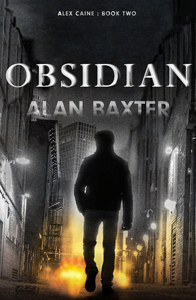
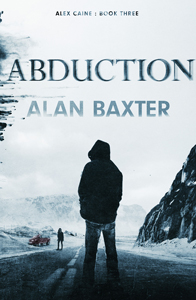
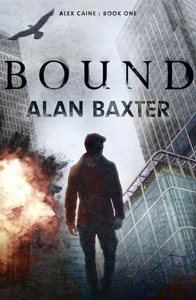
Too long I have been waiting for this! When the Alex Caine Series was released a couple of years back, it was only the first book – Bound – that was released in paperback (reviewed here). As a life-long lover and reader of print books… well, <insert sad face here>. But my happy face has been smacked on as Harper Voyager is re-releasing the series in print and with kick-arse new covers that far better represent the stories and themes of the books.

With this upcoming re-release at the end of June,  I asked the effervescently-barmy Alan Baxter to stop by and tell us a little about his creative process.

So without further ado… *hands over mic*

I’m very grateful to AJ for offering to host a spot on my blog tour for the re-release of The Alex Caine Series. AJ asked me to write a post about the tropes I explored in the series, and that’s quite exciting, because when she says explored, I think subvert.
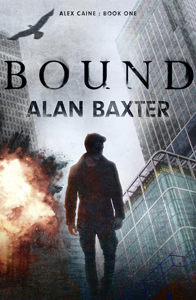
Caine-Bound-book-page

With these books I set out from the beginning to turn some old ideas upside-down. The first book in the series, Bound, was originally going to be a standalone novel. The idea was to take two things that don’t normally go together and fuck around with them. In this case, I had an idea to write a novel about a career martial artist who maybe had a little bit of magic in him of which he wasn’t really aware. And I had this evil book idea, that I really wanted to find a story for. When those things came together I realised I had the opportunity to mess up a big old trope. I’ve always wanted to write what is essentially a big fat fantasy epic quest, but have it set in the modern day, in our world, paced like a thriller and full of dark and monstrous twists and turns. As you can imagine, with the martial artist and the evil book, I had a great scaffold for that exercise. And Bound was born.

By about halfway through the book I realised I had a much bigger story on my hands. The quest and all its associated elements meant I had to have a strong backstory. So, of course, the backstory had its own history, elements of the story I was telling were going to echo and reverberate, and I wanted to tell more of the story. So I had a much larger arc in mind and I started to think about how I was going to tell that.
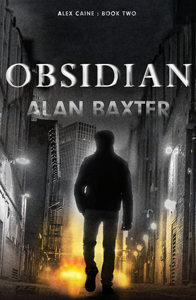
Caine-Obsidian-book-page

The first book was very much the classic epic quest. I decided that the second book, Obsidian, would play with the old idea of the lost city. And the city in Obsidian is really lost. And then, by the third book, Abduction, I had characters and situations that had grown well beyond their humble beginnings, and I found myself with a real “Clash of the Titans” trope to play around with and subvert. I may have indulged my love of superheroes a little obliquely with book 3 too.

So while it’s all one story across three books, every individual book is a complete novel and a complete story as well. And, as I didn’t tie up every single loose end, I have all kinds of ideas for future Alex Caine books if the opportunity presents itself. With any luck the current trilogy will do well enough that I get to write more. There are so many tropes to subvert!

The Alex Caine Series – Bound, Obsidian and Abduction – is available in paperback and ebook now.
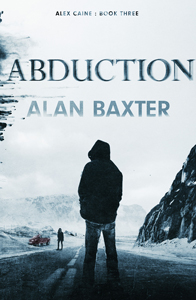
Caine-Abduction-book-page

Alan Baxter is a British-Australian author who writes dark fantasy, horror and sci-fi, rides a motorcycle and loves his dog. He also teaches Kung Fu. He lives among dairy paddocks on the beautiful south coast of NSW, Australia, with his wife, son, dog and cat. He’s the award-winning author of several novels and over sixty short stories and novellas. So far. Read extracts from his novels, a novella and short stories at his website – www.warriorscribe.com – or find him on Twitter @AlanBaxter and Facebook, and feel free to tell him what you think. About anything.

So if you’re looking for a supernaturally good read, get on these!
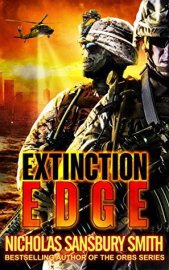
 

Review: Extinction Edge by Nicholas Sansbury Smith

What madness is this! Another review so soon after the last? The world must be spinning off its axis… which is rather fitting considering the theme of Extinction Edge, second book in the Extinction Cycle series. This is definitely a world where humanity is teetering on the brink. Huzzah! I mean… well, I mean ‘huzzah!’ – apocalyptic stories are some of my faves, and when you add in military horror, I’ve hit the trifecta.

Now before we venture into Nicholas Sansbury Smith‘s desolate world of monsters and mayhem, the requisite spoiler warning must be given. *clears throat*

HERE THERE BE SPOILERS. THERE, THERE BE SPOILERS. AND THERE’S ONE. *points* AND THERE’S ANOTHER HIDING BEHIND THAT BURNED-OUT CAR OVER THERE. *points* AND BEWARE THE SPOILERS WAITING IN AMBUSH. YOU HAVE BEEN WARNED.

Right then. Let’s begin.

Extinction Edge picks up a wee time after book one, (review of Extinction Horizon here), and things aren’t exactly plum on Plum Island. Sequestered though they are, there’s no denying the siege mentality needed to survive what’s looking a lot like humanity’s last days.

In book two, we get to learn more about Master Sergeant Reed Beckham and his team of Delta Team Ghost, that now consists of just ‘Big Horn’ and Riley – both of whom are excellent secondary characters who I like a lot… which in my world, means: if I like them a lot, death’s a-comin’ (I hate you Jinx Faerie!).

After losing half his team to the contagion virus, Beckham is determined to get Big Horn back to Fort Bragg to rescue the man’s family (dire though the outcome appears). It’s this that drives the first half of the book, and it’s a rough ride. With Riley severely injured, it’s just the Ghost operators on the mission. And a hell of a mission it is. I’m not going to divulge the fate of Horn’s family, but the battle to get to where the survivors may be holed up, is one of the best in the book.

Extinction Edge

Intertwined with this, is the work of Beckham’s love interest, Dr Kate Lovato, who is trying desperately to find a weapon to combat the monsters born from her previous biological weapon. It’s a mess, but a good mess for a book to have. Kate’s weapon wiped out about 90% of Ebola-ridden monsters, but that remaining 10%? Oh, they’re way nastier, and they’re evolving. Variants, they’re now called, and they’re the stuff of nightmares. (Can I get a huzzah?)

It’s these Variants Beckham and Horn will need to battle if they’re to find survivors at Fort Bragg – where Horn’s family is (hopefully) safe and hidden. It’s clear Smith has extensive knowledge of military tactics and weaponry, and this is brought vividly to life in the battle scenes against the Variants at Fort Bragg. Smith puts to great use high tension and critical action to draw the reader in, and draw it did. It’s been a while since I’ve forgone sleep to read, but Smith owes me at least four hours.

The medical side of Extinction Edge is interspersed nicely with the military action – the peaks and troughs throughout the book give the reader time to breathe, but make no mistake, science is going to play a big role in the books, and Lovato’s character arc is really starting to come into play not just in the lab, but with Beckham. Balance in a totally unbalanced world is a nice juxtaposition.

While it’s clear Beckham and Lovato are the spearheads for the story, the secondary and minor players are well-developed, and don’t sit like cardboard characters on the page. With the amount of death that’s happening (and they’re grisly and kinda awesome), those characters that rise to take the place of those who’ve been lost, hold their own. Fitz is a very addition, and highlights the casualties of a war that’s all too real; Smith gives him purpose, makes him a real player in his own right – he’s fast becoming a… (I see you Jinx Faerie – on your way!).

As the second book in a five-book series, there was always the chance this book could stumble, the author trying to drag out the storyline, but this is a tight read, there’s little wandering from the plot and sub-plots, and the threads are woven together… not so neatly, and they shouldn’t be. This is a story still in its early stages, and there’s much to be discovered. And not all those who’ve survived humanity’s crash are as noble and honour-bound as the soldiers fighting for those who are left.

And with the Variants evolving, hunting in packs and creating ‘food’ stores, the battles are only going to get more bloody. Big shout out to Smith, too, on the creation of the nightmare creatures. They’re an assault on the senses, vile creatures driven by base instincts. And damn difficult to beat.

This is apocalyptic military horror at its best, so much so that I’m already well into book three.

On a Goodreads scale… ooh, it’s tough. Not quite a five, close but just not quite. So… 4.75 stars.

Four and half stars

Pay the Creative

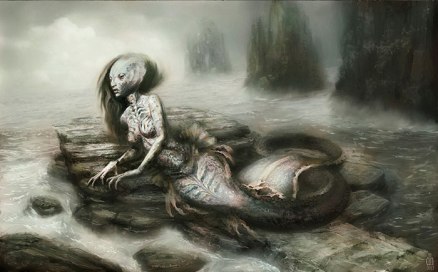
There are two things I have no qualms about spending money on: books and art. As a pen-monkey, I believe books are art in and of themselves – from the cover to the artistry of words within. I smile every time I walk past one of my over-flowing bookcases, or the pile of books on my bedside table.  All of which complement the art on my walls. And the nine pieces I’ve yet to frame and hang… oh, they call out to me to find their place.

a-mindful-installation

Yes, I’m running out of wall space, but that’s okay, we’re in the process of finding another place to call home, and while a new house has to hit the right marks with bedroom numbers, office space, backyard, for me it’s wall-space and bookshelf positioning I see. But I digress.

Of late, I’ve been seeing a lot of posts regarding consumers not willing to pay for books for all manner of ridiculous reasons. Here’s one such post that goes into detail about one author rallying against some readers who feel they shouldn’t have to pay for a writer’s work, that the art of storytelling and providing a reader with a product should be given away for free. (I rolled my eyes so hard they fell out of my head, and I had to retrieve them from my cats.)

Pisces

But it’s not just authors who are expected to work for ‘exposure’. Artists, too, are often targeted to provide their work for free (or exposure). You can’t pay bills with exposure; you can’t eat a reader’s ‘good will’, and ‘word of mouth’ doesn’t pay your kids’ school fees.  The fact there are those out there who expect you to work for free, to help them achieve a product that will make them money but not you… damn, that’s hard to get my head around.

Like the books I read, I buy my art. Never would I consider asking an artist to forgo the hours of work and their inspiration just because I like something and want it to adorn my wall. I don’t ask my tattooist to ink my skin for free either. But there are others out there – parasites I call them – who believe artists should just give their work away. The Brave Little Illustrator captures it perfectly here. There have been times when I’ve found a piece of artwork I just have to have, and to own it meant putting my pennies away until I could afford it. That’s just what you do.

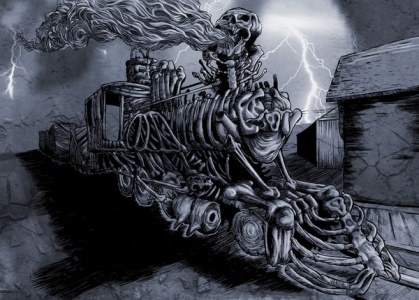
train in vain 1

I don’t set out to find art, it finds me. I’ll see a post on social media, someone will share an artist’s work they’ve come across. I’ve found artists at conventions, expos, bookstores… so many different places, and these pieces, I know, belong with me. So I have no compunction for paying for the art, because this allows the artist to live to create more.

And that’s what it’s all about. Here in Australia, our current government has cut arts funding and scholarships, and they’re looking at allowing parallel importation that will grossly undermine the earning ability of writers in this country, and dropping copyright to fifteen years from publication before it becomes public domain. There’s this growing belief that the cultural contribution artists and writers provide isn’t worth the time or paper it’s created on. Art and books create escapism, they take you to places that ignite your imagination, give you respite from the ugliness that intrudes upon our lives, and if that isn’t worth something, what is?

Raniermos

So if there’s a book you want to read, or artwork you want for your home, or perhaps some external or internal art for a book you’ve written… pay the artist!

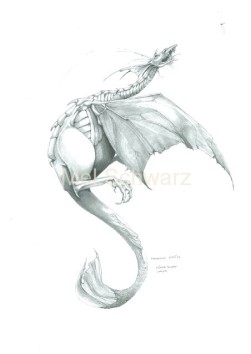
A big shout-out to those artists whose work adorns (or soon will) my walls: Monty Borror, Jeannie Lynn Paske (Obsolete World), Damon Hellandbrand (owe you an email, dude), Greg Chapman, and Mel Schwarz. Check out their work, and that of Dean Samed and Caroline O’Neal. As for saving for art, it’s a Chris Mars piece I’m looking at next adding to my collection.

Oh, and a big-up to Andrew J McKiernan, who gave me the illustration he did for my story, ‘Nightmare’s Cradle’, which sits proudly above my desk.

7_nightmare_s_cradle

* All pieces shown within this post I have bought from the artists (apart from Andrew’s piece, which was paid for by Andromeda Spaceways Inflight Magazine).

Review: Extinction Horizon by Nicholas Sansbury Smith

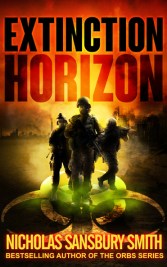
Ooh, lookit me posting another book review so soon after the last! I’m on fire! Or rather, Extinction Horizon was. That just goes to show how much I enjoyed the first book in The Extinction Cycle series. This is the first of Nicholas Sansbury Smith’s work I’ve read; I love discovering new authors (new to me, not to others… or him… shut up, I need more coffee), delving into the world they’ve created, or rather, in Smith’s case, a world destroyed.
Extinction Horizon follows Delta Force Team Ghost, and Master Sergeant Reed Beckham, and right from the start… hang on… just let me…

HERE THERE MAY BE SPOILERS. MAYBE BIG SPOILERS. ACTUALLY, NO ‘MAYBE’ ABOUT IT. BIG SPOILERS INCOMING. READ ON AT YOUR OWN RISK. DON’T GO BLAMING ME IF YOU DEFY ORDERS AND CONTINUE ON. YOU HAVE BEEN WARNED.

Extinction Horizon

Okay, if you’re reading this now, you’ve accepted the risk of spoilery spoilers. Good for you, ‘cause this is a damn shitty world with frightening monsters Smith has delivered. It begins scarily enough – an experimental drug (VX-99) given to an elite team of Marines during the Vietnam war that backfires spectacularly. It has devastating effects on the men, guinea pigs for all intents and purposes.

Next – Ebola virus. That’s enough to have you reaching for a Hazmat suit, but when you have an army general working with a virologist and wanting to create a super-virus to use on the enemy to save soldiers’ lives… oh, it ain’t gonna end well.

Reed Beckham and his team are sent to retrieve the virus from a secret facility, and this is where we’re first introduced to the ‘monsters’ that’ve been created by this super-virus. It’s also where Beckham loses half his team. Things go from bad to worse when this virus breaks containment lines and spreads like the plague it is.

Before long, the world has gone to shit. In a big way. We’re talking extinction event here, with only small patches of survivors. And within this is CDC virologist Dr Kate Lavato – tasked, now, with finding a cure. It’s clear early on that she will be Beckham’s love interest, but she has also become the focus of Beckham’s need to protect. With humanity almost gone, Beckham’s need to find purpose is what drives him, and Lovato is the key to humanity’s survival.

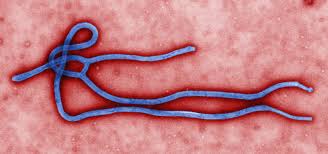
But let me get to these monsters. Ebola is a haemorrhagic virus; victims bleed-out internally in horrifically painful ways. But with the addition of VX-99, you get an altogether different monster. One that has its origin in the origin of species. We’re talking what first crawled out of the sludge. Inhumanely fast, with joints that crack and bend at unnatural angles, and an insatiable need to feed on protein (that would be humans, just so we’re clear), infection rates skyrocket.

ebola

Look, I could go on and on about how good this book is. But you don’t have time for a dissertation, and I really should be working. What you should know is this apocalypse-event story is filled with high-tension, incredible military action, intrigue, deceit and, at times, a sense of despair at what’s happening. But always there is hope. That’s what I love about books such as this.

This isn’t going to be an easy-fix situation; Delta Force Team Ghost is facing a monster-super-soldier that is almost impossible to defeat. The thing with humanity, though, is that it lives for a challenge. Adapt or die. And dying isn’t something Beckham, his team of Riley and Horn, on their list of things to do.

One of the things that did have me thinking (and still does) is how easily a contagion can spread. A carrier on a plane, on a train to work, of someone coughing in the wrong place… one lapse and we’re looking at extinction. And that’s something Smith works well into his book – the ‘what if’ that so readily sits beneath our primal fear of deadly contagious diseases that could so easily turn pandemic.

As the first in the series of five, this book does all it’s supposed, and while I would have wanted to see a little more emotional struggle from Beckham when it comes to Lovato, that’s a small thing when dealing with a soldier who has spent most of his life detaching himself from the horrors of what he does.

Book two in the series, Extinction Age, is sitting on my bedside table ready to go. And it’s a thicker book too, which means more military goodness coming my way. I think that means, why yes… I’m…I’m a fan. That’s always a great way to end a review.

Or, end it with a Goodreads scale of 4.5 stars.

Four and half stars

Art of the Cover

Covers matter. They do. That old adage: Don’t judge a book by its cover, if taken in its absolute literal sense, is utter bullshit. Covers are your visual selling point; it’s the first thing a potential reader (and buyer) sees. And if it’s terrible and/or amateurish… Behold, I will judge with all my judgey judginess! I will slam down my imaginary gavel, and I won’t buy your book.
But wait, I hear you say, what if the story is brilliant? Then invest in good cover art, dammit. Invest in it like you invested in your story. All those hours you agonised over words and plot and characters, of the sleep you sacrificed, eating at your desk, of wondering whether you showered today… or was it yesterday… (No? Just me then…), invest that same excellence in your cover art. Don’t just slap any cover on your work (and for the love of all things holy and unholy, unless you’re an artist, don’t do it yourself!), ’cause I will judge your book by its cover, and so will a lot of others.

I read a lot, and as a buyer of print books, a beautiful and/or interesting cover will draw me in as much as a shitty one will repel. And with the amount of both print and electronic books on the market, a good cover is half the battle won. I’ll pick it up, and if your blurb is good (that’s fodder for another post), then that’s a sale. When it comes to my hard-earned cash, I’m particular on how I spend it, and I’m more likely to spend on a book with a beautiful cover, than I am on one with a shite one.

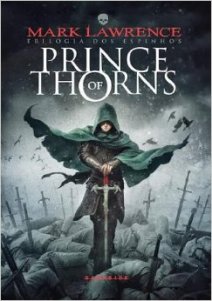
For someone with a mountain of ‘to read’ books who also can’t walk past a bookstore without venturing into its delicious depths, I’m always looking for new authors to read. A cover is where it all begins. It led me to Mark Lawrence and his Broken Empire and Red Queen series, and now I’ll read anything the man writes. Seriously, go to his website and buy the man’s books. Go. Now. I’ll wait.

prince-of-thorns

<insert Muzak here>

Back? Excellent.

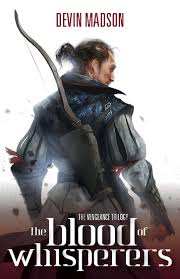
Another thing I often hear is that bad covers are the domain of the author-publisher. Again, I call bullshit. The advent of author-publishing and the (now-diminishing) stigma attached to it, has shown authors know the value of a great cover. There are self-published authors whose books have gorgeous covers – this tells me they’ve thought long and hard about their finished product, about their reader. And covers should reflect the content, the world and atmosphere of a book. Take a look at Devin Madson’s The Blood of Whisperers – the story inside is as beautiful as the cover. Another author whose work I will now always read.

BoW

As an editor, I understand the importance of covers, how they work to sell the story/stories inside. If you can excite a potential reader by the cover art alone, then you’re looking at sales. Sales are good. Sales mean the author (or authors, when an anthology) will be read, and those authors may begin to get a fan-base – and there’s not a lot better than that. As an editor for Cohesion Press (an Australian small press), their mantra is to always source kick-ass cover art. Great cover art gets readers excited, it builds interest, it builds sales. But more than that, it’s the finished product. Readers will appreciate the effort you put in, and they’ll remember your name.

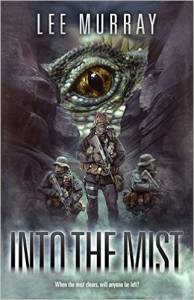
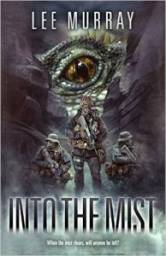
Into-the-Mist-194x300

I know there’ll be those out there who will bemoan the cost of cover art. That good cover art is unaffordable. Well before you do that, how would you feel if someone bitched about the price of your book? Good cover art costs, just as good editing and proofreading – all essential parts of the publishing process. You want to put your best work out into the world, right? Right?

The reason I decided to write this post was the cover artist for Cohesion’s books, Dean Samed (check out his work) just yesterday had his site go live, and his cover-work is just astounding. Each piece grabs you, it takes you places, and it defines what’s on the inside pages. The last thing any author wants is a horror book (for instance) with a decidedly romance cover. That’s a betrayal no reader will tolerate.

There are amazing artists out there who love creating cover art for the books you love creating. Check out Deviantart, get onto artists’ sites, and if you like the style of a book cover, the artist is usually mentioned in the front-matter. Social media is a great way to get recommendations for artists, for those who specialise in covers, who can put the best ‘coat’ on your baby.

Do a little research, chat to artists, find great art. Your book will thank you for it.

Tusk

Review: City of Wonders by James A Moore

It’s been a while since I’ve reviewed a book here, but as the current word count on reading for work sits at 2, 148, 400 (that’s right, over two million words so far this year), I can be excused for my slow reading-from-my-bookcase rate… and why it took me way longer to read this book than it should have.

So… grab a battle axe, or any self-forged weapon you have handy, wrangle a pra-moresh and mount up – it’s time to make war.

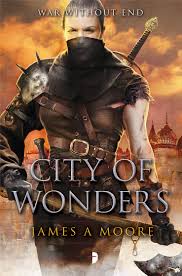
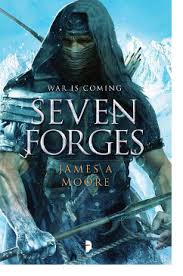
City of Wonders is the third book in the Seven Forges series by James A Moore, and it carries on beautifully and brutally from the first two books. And brutal it is. The kingdom of Fellein is at war with the Sa’ba Taalor – grey-skins born for battle. There’s no pussy-footing around when it comes to war, and Moore doesn’t shy from the savagery of it.

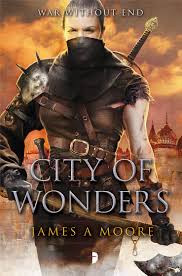
City of Wonders

Now we’re really getting into the meat of battle (can I get a ‘hell yeah!’). The Sa’ba Taalor are ferocious opponents, not given over to fear or mercy. The Fellein are woefully outmatched. Too long they’ve sat comfortable, idle, and they’re paying a damn high price for it.

While there are a lot of players in this series, and the story is told from multiple viewpoints, this only adds to the understanding of both sides of this war. That’s the thing with Moore’s writing, and why I am enamoured with this series – you can’t pick a side. There are no essentially ‘bad guys’ in this war; each side is fighting for their gods; each side has their story and you when you’re in the mind of one of the storytellers, you wholeheartedly understand why they’re fighting – be they Merros Dulver, commander of the Imperial Army, or Tarag Paedori, the King in Iron; or Andover Lashk, Swech, Drask Silver Hand, or Empress Nachia… you side with them, no matter which side of the war they sit.

There’s magic here – sorcery and necromancy. And you can’t forget the gods. The seven gods of the Sa’ba Taalor are one of my favourite parts of this series – so different from anything I’ve read, and while we see more of them through Andover Lashk and his trials, there’s still mystery surrounding them and I’ve no doubt we’ve yet to see the power they can truly wield. Through their gods, the Sa’ba Taalor have had a huge advantage (well that, and they’re a fearsome bunch – even the children are fierce warriors, able to disembowel a soldier with an adept flick of their wrist and weapon), and have destroyed a large portion of the Fellein empire and its people.

The Fellein put their faith in their (mostly) well-trained army, and that of their sorcerer, Desh, but City of Wonders brings the Fellein’s gods to the fore in the form of The Pilgrim. Enigmatic leader of a the faithful he’s collected on his journey to the city of Canhoon, the City of Wonders.

Gods fighting gods, monsters aplenty, warriors pitted against soldiers, and within it all, individuals just looking to survive. Through their eyes we see this looming apocalypse – there can be only one winner. That’s the thing here, though, I don’t know whose side I’m on. It’s Moore’s ability to get the reader inside the head and heart of those telling the story that makes it difficult to pick a side. And there’s a beauty in that – it shows that war isn’t a thing of the masses, but that of the individuals that make up the world and the battle, what they risk and why.

Seven Forges

Moore’s writing completely transports, his characters are fantastically fantastic, and the tension he weaves through it all is expertly done. Oh, and the twists? You’ll love those too. There are few authors I read where I wish I could write as well as them, but James A Moore is one them.

I can’t recommend this series enough. If you’re looking for fantasy on the darker side of things, and a magic system and gods that mess with any preconceived ideas you have, then you can’t go wrong with City of Wonders, let alone the whole Seven Forges series.

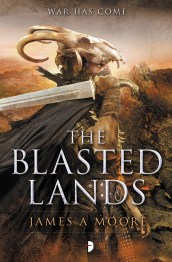
 The Blasted Lands

Special shout out to the cover artist for all the books, too. I don’t at all subscribe to the adage: Don’t judge a book by its cover. That’s bullshit. If you’re a print-reader like me, covers are what make you pick up a book, and the covers for all the books in the Seven Forges series are just gorgeous, and perfectly capture the characters they depict, and the world in which they live.

Book four, The Silent Army, has just been released, and while I’m desperately looking forward to reading it, part of me wants to hold off, to prolong this series for as long as I can. The world Moore has created is one I’d happily spend a long, long time in. And if that’s not the mark of a great storyteller (and books), I don’t know what is.

On a Goodreads scale, I give this five stars… big gold ones ten feet high.

five stars

It’s a Win!

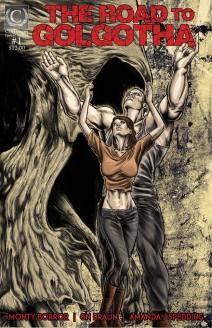
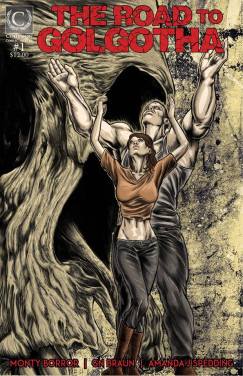
Two days on from the Australian Shadows Awards, I’m still riding the high of the win. Yep, that’s right, The Road to Golgotha, won the inaugural award for ‘written works in a graphic novel/comic’. Excuse me while I Snoopy dance. (Look away now if you’d like to keep your food down…)

The ‘Shadows’ are the premier horror awards put together by the Australian Horror Writers Association. Judged by those who know and are passionate about the genre makes a win even more sweet – getting the nod from those within the industry, within the genre you love, that your work is top notch.

The Road to Golgotha

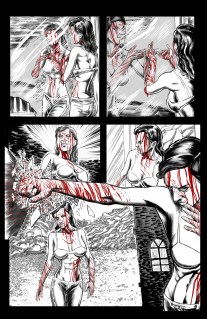
The Road to Golgotha is two stories within the one tome: His Own Personal Golgotha penned by GN Braun, and my story The Road. So I get to share this win with my mate Geoff. Not only that, I had the pleasure of telling him we’d won (he was making coffee at the time; can’t fault him that), and then a good five minutes convincing him it was true.

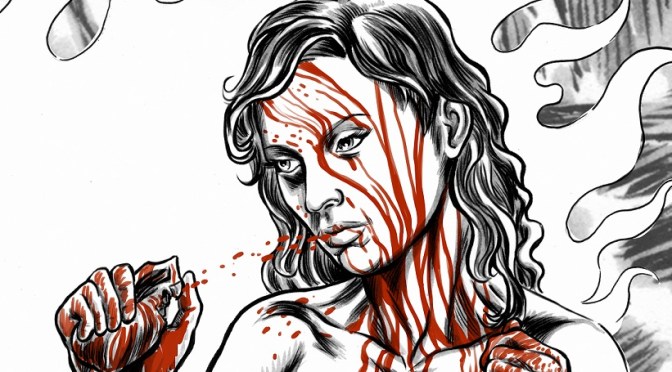
This is my second Australian Shadows Award win, having won for the short story category in 2011. What makes this win so amazing is the amount of work and effort that went into writing the comic. It was a totally new medium for me and Geoff, a damn steep learning curve, and I’m not ashamed to say it almost broke me. But… challenge accepted. I was determined to write the best damn comic I could, to take the reader to a very dark place and stride along with Riley as she owned every decision she made for what she wanted. To be rewarded with the Shadows Award… yeah, that’s pretty damn sweet.

And the cherry on the icing of an amazingly cool cake was the words from the judges:

“The Road to Golgotha provides an immediate escape into visual horror with the first turn of the page. Like a modern-day Dante’s Inferno, here we have two tales of two very distinct, yet similarly tortured characters on quests through unknown regions of the human soul. Expertly illustrated by Monty Borror, The Road to Golgotha is a gorgeous comic that left the judges spellbound and wanting more.”

road page 28    Golgotha

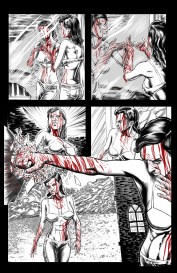
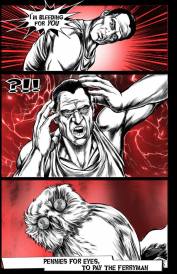
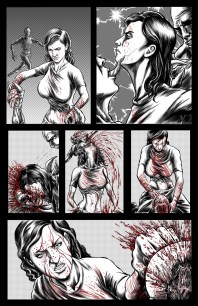
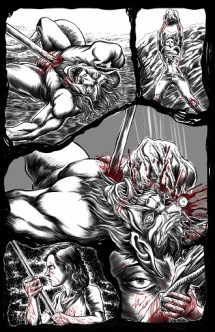
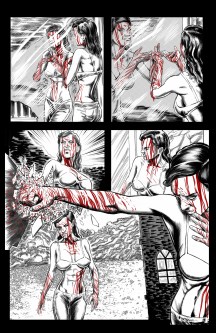
And the judges were on-point giving Monty Borror the kudos he deserves. ‘Expertly illustrated’ is right – Monty brought Geoff and my visions of the comic to extraordinary life, often seeing more in our scripts than we did. I can’t thank him enough for making Riley and her road and monsters exquisitely horrifying. (I’ll be scattering pages from the comics through this post, beware!)

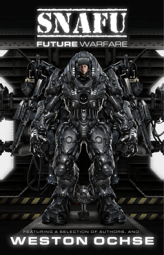
This was also the first win of the night for Cohesion Press, with The Road to Golgotha being the inaugural imprint of Cohesion Comics. There were more to come. Next up was Alan Baxter’s In Vaulted Halls Entombed, which won the Paul Haine’s Award for long fiction. Alan’s story appeared in SNAFU: Survival of the Fittest, put out through Cohesion. This is a brilliant story, and deserved of the win.

The last in Cohesion’s trifecta was in the edited works category, with Blurring the Line (edited by Marty Young), taking out the win. This anthology is a superb showcase of horror that blurs the lines between what’s real and what’s not. And in the words of the judges: “There are some exceptional tales in this collection, gripping, compelling and haunting stories, the kind that stay with you for a good while afterwards.”

The wonderful thing about Aussie (and Kiwi) horror is that you’re bound to know pretty much all those in the industry down under. So I was chuffed to pieces that the short story category win went to amazing writer and my mentor, Kaaron Warren. If you haven’t read her work, you should. You really should.

road page 25.jpg

The collected works category was taken out by one of my favourite people in the world, Robert Hood. His gargantuan tome, Peripheral Visions (an 800-page collection of ghost stories and amazing artwork), showcases not only his remarkable work over decades in the genre, but Australian horror at its best.

So two days on, I really am still riding the high of winning the award, and being among some of the best writers in horror today. Huzzah! So if you’re looking for a horror graphic novel that pushes you past the comfortable, and takes you on a wild ride of monsters and oh-so terrible places, then The Road to Golgotha is just what you’re looking for. Trust me, I know the writers.

road page 28

Check out the list of winners below, and if you haven’t read their work, get thee to a bookstore! Or e-store! Or library!

Best Written Works in a Comic/Graphic Novel: The Road to Golgotha – GN Braun & Amanda J Spedding (Cohesion Comics)

Best Edited Works: Blurring the Line – Marty Young, ed. (Cohesion Press)

Paul Haines Award for Long Fiction: In Vaulted Halls Entombed – Alan Baxter (SNAFU: Survival of the Fittest, Cohesion Press)

Best Collected Works: Peripheral Visions: The Collected Ghost Stories – Robert Hood (IFWG Publishing)

Best Short Story: Mine Intercom – Kaaron Warren (Review of Australian Fiction)

Best Novel: The Catacombs – Jeremy Bates

Rocky Wood Award for Non-Fiction and Criticism: The Literary Gothic by Marija Elektra Ridriguez

Oh, and the trophy we’ll be getting? Yeah, it rocks!

AusShadows-trophy

So many words…

So April must have knifed the previous three months in the back and leapfrogged ahead. That’s the only explanation for me to be looking down the barrel of the first school holidays for this year. It’s been a busy three and a half months editing wise, and after being offered the role of lead editor for the SNAFU series, and editor for Cohesion Press’ upcoming releases, it’s been a whirlwind of amazing words crossing my screen.

What hasn’t been happening is reading for pleasure (although, conversely, the stuff I’m reading for Cohesion is brilliant indeed). But I’ve had the same novel sitting on bedside table, untouched, for going on three months. And it’s a novel I’m truly invested in – City of Wonders, the third in the Blasted Lands series by James A Moore. However, by the time I head to bed after a full day of editing, my eyes feel like someone’s rubbed them with sandpaper, and I know picking up the book will do not only me, but the story itself a disservice.

Last year I read a total of twenty-five books (novels, anthologies, collections and graphic novels), and that doesn’t seem a lot for the average avid reader, which I’d definitely class myself as. So why wasn’t I reading as much as I thought I should (or wanted)? I’ve often said I read a lot for my editing business, but had no real idea what ‘a lot’ was, so I decided to quantify ‘a lot’ and started keeping track of the word count of all I read for “work”. Yes, those are deliberate quotations – see previous paragraph about the brilliance of what I read.

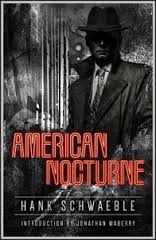
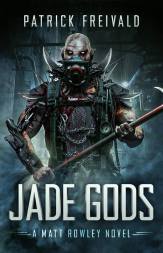
SNAFU Future Warfare  Into-the-Mist-194x300  American Nocturne  Jade Gods

Now anyone who knows me, knows that not only do I totally suck at math, but math totally hates me back. It’s giving me the finger right now. But even I can’t deny the numbers, and believe me, I’ve tried. From ‘That can’t be right’, to ‘Stupid fat fingers must be hitting the wrong buttons’. But no. The numbers definitely add up. It’s a believability thing.

In January of this year, I read a total of 300,200 words; February was a doozy, reading 568,100 words, and March? 392,350. In the first three months of this year, I’ve read: 1,260,650 words. That’s right – one million, two hundred and sixty thousand, six hundred and fifty words.

If we break that down to novels – at a word-length of 90,000 – that’s …. (hang on, doing math, this may take a while)… okay, that’s 14 novels. Fourteen novels in three months. That’s more like it! That’s more me.

The beauty of reading for editing is that you sometimes get to read stories that you may not normally pick up at a bookstore or buy online. This year I’ve read horror, military horror, regency romance, crime, fantasy, YA, children’s books, non-fiction on refugees and Human Rights Law, eating disorders, and corporate planning. It’s a funny ol’ world.

City of Wonders

I used to feel guilty about not reading as much as I used to, but not anymore. Sure, my ‘to read’ mountain grows ever-higher. And yes, I’m still buying books to read – really, that wasn’t ever going to stop. But now I look at the novel sitting on my bedside table and think: Soon, my pretty, soon. And when we are once again reunited, it will be bliss.

All of the Yays!

Finalists for the Australian Shadows Awards for horror fiction were announced today, and I’m absolutely chuffed that the comic, The Road to Golgotha, has made the shortlist in the Comic/Graphic Novel category. Woo and hoo! Huzzah! Woot!

The Road to Golgotha

The brilliant thing about this nod is that as The Road to Golgotha is effectively two stories (His Own Personal Golgotha and The Road) within the one tome, I get to share this nomination with GN Braun, who was with me every step of the way as I strove to get the script just right. A huge shout-out has to go to our artist, Monty Borror, whose horrifically beautiful illustrations brought the comics to life.

road page 19 a    road page 28

 
The incarnation from published short story to comic, The Road was two years in the making, and this nod is the icing on a very cool cake that involved the launch at Melbourne ComicCon last year (you can read an awesome review of it here). As my first foray into comics, I can’t tell you how damn awesome the validation is – you always want your babies to do well. It kicks that writerimposteritis in the guts, too.

But it doesn’t stop there. On the editing side, Alan Baxter’s In Vaulted Halls Entombed, from SNAFU: Survival of the Fittest, is a finalist in the Paul Haines Award for Long Fiction category. From the moment I read this story, I loved it. So seeing it nominated as well, is a huge buzz.

There are so many amazing writers nominated this year, a lot of whom are close friends, so this has been an amazing day of congratulating peeps I couldn’t be happier for, and being super-chuffed to have the comic given the nod.

So, if you’re looking for some amazing Aussie writers to read, the finalists of the Australian Shadows Award is a great place to start.  Congratulations to all the finalists!

The Paul Haines Award for Long Fiction

In Vaulted Halls Entombed – Alan Baxter

The Haunting of Gillespie House – Darcy Coates

Night Shift – Dirk Flinthart

The Whimper – Robert Hood

Edited Works

Bloodlines – Amanda Pillar

Lighthouses – Cameron Trost

Midnight Echo 11 – Kaaron Warren

Blurring the Line – Marty Young

Collected Works

The Abandonment of Grace and Everything After – Shane Jiraiya Cummings

Peripheral Visions: The Collected Ghost Stories – Robert Hood

Cherry Crow Children – Deborah Kalin

Short Fiction

The Bone Maiden – Greg Chapman

Eight Seconds – Pandora Hope

El Caballo Muerte – Martin Livings

Perfect Little Stitches – Deborah Sheldon

Mine Intercom – Kaaron Warren

Comics/Graphic Novels

The Road to Golgotha – GN Braun and Amanda J Spedding

Troll – Michael Michalandos

The Monster – Ben Rosenthal

Undad – Shane W Smith

The Rocky Wood Award for Non-fiction and Criticism

Winner to be announced

Novels

The Catacombs – Jeremy Bates

The Haunting of Blackwood House – Darcy Coates

The Transgressions Cycle: The Mothers – Mike Jones

The Transgressions Cycle: The Reparation – Mike Jones

The Big Smoke – Jason Nahrung

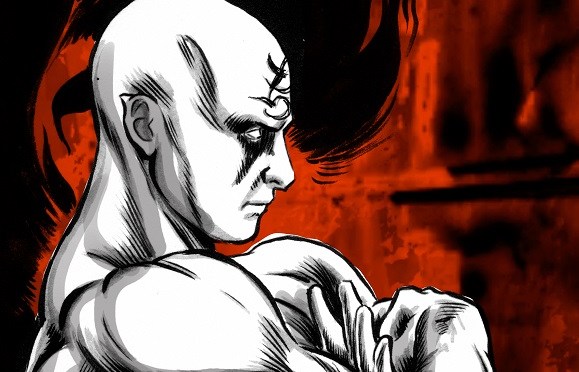
Riley

Watch this space…

Print, dammit!

Any one who knows me, knows that when it comes to reading for pleasure, my preference is print books. Always print. I have overflowing bookcases (which means I don’t have enough bookcases), a mountain of ‘to read’ books on my bedside table, stacked neatly on the floor… and anywhere else I can find room. And I tell ya, every time I see them I smile. I mean… BOOKS!

So a couple of years back when Alan Baxter put out the first of his Alex Caine trilogy, Bound, I waited until Supanova Sydney to grab myself a signed copy. The only thing better than a print book is a signed print book. It was a kick-arse story, and you can read my review of it here. Pumped as I was to read the next, I was told, rather sheepishly by Alan, that print copies for books 2 and 3 were still up in the air, but ebook was available.

I flinched. Ebook? But no! I want print! PRINT, dammit!

It’s taken almost two years, but they’re here! Well they will be in June. And the new covers are just brilliant – so much more evocative and in-line with the story within. Take a look.

Caine-Bound-book-page   Caine-Obsidian-book-page   Caine-Abduction-book-page

This does, of course, bring up one problem. Well, not a problem per se, more… well… I can’t have mismatched covers, okay? There. I said it. It’ll drive me nuts. Niggle at me. Like an earworm… constantly whispering: not the same, not the same, not the same.  So three new books it will be. All of which will be signed.

Check out the book blurb for Bound, then do yourself a favour and put these books on your wish list.

Alex Caine, a fighter by trade, is drawn into a world he never knew existed – a world he wishes he’d never found.

Alex Caine is a martial artist fighting in illegal cage matches. His powerful secret weapon is an unnatural vision that allows him to see his opponents’ moves before they know their intentions themselves.

After a fight one night, an enigmatic Englishman, Patrick Welby, claims to know Alex’s secret. Welby shows Alex how to unleash a breathtaking realm of magic and power, drawing him along a mind-bending trajectory beyond his control. And control is something Alex values above all else.