Category Archives: Writing

2017: Heroes and Vikings, and the Shit Year it was

If it were up to me, I’d wrap 2017 in a whole pile of monkey shit and set that bitch afire. Twice. But part of me wants to hold tight to 2017, to never let that first part of it go. There was good in my 2017, but the shit… oh, the shit. When I look back on this year, I can see the wonderful in it: the successes, the people I’ve met, and those I’ve surrounded myself with. Of that, I am thankful, but the last half of this year especially was life-changing in a way you never want it to be. The way no one ever wants it to be.

There are some things you just never get over, and the loss of my mother darkens any good this year threw my way. This is the first time I’ve mentioned her passing publicly, and I’m not going to go into how amazing she was (she’s a hero, my hero), and how hard she fought (like a fucking Viking), or how fucked-up disease is (I never knew how much I could hate a thing), or how much I miss her (there’s an ache inside that will never go away). She deserves so much more than I could ever put into words.

Writing has always been a solace, but I’m only now starting to think of words again. Small and simple though they be, it’s a start. There’s a normalcy to it that my heart sometimes fights ‒ how can I be ‘normal’ again? But I can almost feel that slap upside my head. Like I said, a fucking Viking.

2017 was the year I had my mother. It was the year I did not.

So I wrote a thing, not long before the world ripped away what was light and good. It’s nothing special, but it’s from a life to which I can never return. A life where my mother’s heart beat in fierce defiance.

I wonder at its content; it resonates now in a way it didn’t when I wrote it. And while I want to see the end of this shittiest of shittest years, I also want to hold onto it and never let it go.

HARVEST

“In blood Skarja walks, the souls of all she’s killed the great shadow at her back!” Mira shouted above the storm’s fury as I grabbed my scythe. “My dreams do not lie!”

Too long I’d stayed; lines appearing on my wife’s face where they never would on mine. I’d run, draw Skarja away. Mira would be spared. This time, no children had I sired.

Howling winds rattled the shutters of our hut as Mira dragged me from the door. “She comes! Your name upon her lips!”

Fear for me darkened her eyes. That was why I’d loved again when I’d sworn nevermore. My kiss lingered, savouring lips I hoped would never curse my name.

“Flee,” I begged. “Wipe me from memory.” I charged into the storm. If I could get to the mountains, if—

Skarja loomed from the maelstrom, spitting my name like venom. “Evka.”

A thousand cuts glistened on her ebony skin, like lightning under the moon’s touch. I knew each one. Had delivered them with hate-fuelled rage ­‒ desperate for what she had that I did not. The shadow behind Skarja writhed as she gathered it to her, faces of the damned morphing into great black wings ‒ shredded and shrieking.

“Not Mira.” I discarded my weapon; dropped to my knees. “Please, not my Mira.”

Skarja laughed; drew me close. Wings wrapped tight tore into my flesh. “You cannot kill a god,” she whispered ‒ words we’d traded since the dawn of the world.

I screamed Mira’s name as Skarja ripped out my heart, taking it as her own. Memories shattered as my twin fled into the night with the one heart we eternally shared.

In the doorway of a hut, a woman sobbed as I gathered my scythe. She, the first harvest for my great shadow.


malfunction_by_skirill-d9m0frr

Art: Malfunction by Skirrill
 

FESTIVUS BOOK PIMPING COMING SOON

Yes, folks, we’re edging toward that time of year. If you’re like me, the idea of heading into those outside places with those outside people and running the gauntlet of shoppers as I try to find gifts, brings not so much Christmas cheer, but Christmas jeer. Or beer. Yeah, beer would be good.

Aaanywho, for those of you who are readers, or know readers, or love readers, or can’t think of a present for a family member, a friend, a work colleague, or even your drunk Uncle Dave, fear not! From December 1, I will be reviving Festivus Book Pimping. 

As the name suggests, I will be pimping books I’ve read* and those I’ve worked on, and giving a small breakdown of what each entails, and who they’d suit. Be warned, though, if it’s romance you’re after… well, at least you’ll get to see some great covers.

Books are amazing gifts. They ignite the imagination, they can take you to different worlds, and have you live different lives. And as a present, there’s not much better than that. Except kittens. And puppies.**

All right, buckle up mofos, Festivus Book Pimping will be landing soon!

book imagination

* This is not a call out for reviews or ‘read my work!’ ‒ stay classy, people.

** Kittens and puppies are for life, not just Christmas ‒ don’t be that asshat.

The stories that keep on giving

Writers will tell you nothing much beats publication – be it a short, novella or novel. Signing that contract, getting paid (yes, you should be paid for your work), and having your story out in the world is like crack.

But what happens to those babies once they’ve flown the nest and found new homes? After a given time, well those babies come back. Most will stay filed away, but never underestimate their chance to fly off again and find new homes, new readers.

Reprint markets. Oh, they are wonderful things. One of my babies has found a new home with Digital Fiction Publishing League. Unlike children (real, human-like ones) there are a few stories of mine that are favourites, and The Whims of my Enemy is one of them. It’s a brutal story, unforgiving to all the characters within, but more so with the main protagonist. Hers is a torturous ride, filled with violence and weighed against the desperate need to survive, and what that survival may cost.

Killing it Softly 2

It seemed a good fit for Killing It Softly 2: a fiction anthology of short stories (the best of women in horror). It’s quite the title, and the editors at DFPL were not only kind enough to accept ‘Whims’ but made it the lead story in the antho, which I was extremely chuffed with. There are some fantastic authors I’m sharing the pages with, and it’s one hell of a tome. Thirty-eight stories that run the gamut of all things horror.

Here’s the blurb:

The first ‘Killing It Softly’ was just the tip of the iceberg…

Beneath the icy depths of this next installment, you’ll be plunged into a world where 38 female horror writers give you a glimpse of their inner-demons, unleashing the hell-fire they suppress in the ‘real’ world. It will disturb you to discover what really lurks inside their minds, because many of these stories delve into pain that can only be experienced by women—leaving you unhinged as you curl up with them during their darkest hour.

Post-partum depression, hording, anorexia, and mental health will be brought to light when viewed through the shadowy perspective of cognitive deception.

Sci-fi, romance, steam-punk, and fantasy intertwine with horror to deliver unsettling, chilling stories; traditional tales of witches, zombies, werewolves, and vampires will be told in twisted new ways that will shock, unnerve, and even repulse you…and within these pages, sometimes new monsters will arise from the ashes.

You may even discover that women can not only write good horror…but in some cases, can do it better.
So if you’re of a mind, and looking for some killer short stories to while away the hours, then check out Killing It Softly 2 ­‒ there’s a little horror out there for everyone.

And for you writers out there, remember there is more than one life to the stories you’ve sent out into the world. Let those babies fly again!

Writers, Retreats, and Insane Asylums

It’s been just over a week since I returned from a Writer’s Retreat held at Mayday Hills Lunatic Asylum at Beechworth. Yep, you read right – a writer’s retreat held at an old insane asylum. It was as awesome as it sounds. Five days sequestered with other writers in a hauntingly (and quite possibly haunted) beautiful asylum is the stuff of inspiration. And personing. I did a whole lot of personing.

What made this doubly excellent was the other writers in attendance, all but one of whom were very close friends, so it was a catch-up of epic proportions. This also meant that we were all comfortable throwing around ideas and points of view, and engaging in general shenanigans. But we were there to write, to have that uninterrupted time some of us seldom get when at home. And it was glorious.

Writing is often a solitary endeavour where you live in your created worlds among created people. But put a bunch of writers together, and it’s a whirlwind of book discussions, plot summaries, story ideas, and why synopsis writing is the tenth circle of Hell. There’s joy in this cacophony; the rise and fall of voices, the quirks and strange paths conversations take that would make no sense to non-writerly folk but which feeds the soul and the muse of those who bleed ink. They will tell you why your story necessitates the killing of a character (beloved or otherwise) then offer a plethora of options on how to do so that would land them on any federal watchlist.

Just being among fellow scribes is enough to invigorate, enough to drown out that writer-imposteritis but we were also fortunate enough to have the wonderful pocket-rocket Kylie Chan providing workshops all through Saturday, which were fantastic, but always there was time to write. There’s not a lot better than sitting in a nicely heated room listening to the clack of keys in the silence as worlds and people are created – individual galaxies within a shared universe. It’s kinda cool.

But when we weren’t writing, there were historical tours of the asylum, and one very late night there was also a paranormal investigation. As much as I would have liked to go on the paranormal investigation, when it’s -4˚ outside… well, I’m staying where the heat is. Those that took up the challenge had a great time despite the sub-zero temps.

We ate, slept and created together… wait, let me rephrase. Look, we bunked down in the same room, wore pretty much all the clothes we’d brought with us when it was time to venture outside – hell, I even wore my slippers out to dinner because damn it was cold. We took the piss out of each other, we laughed, and we revelled in our own and each other’s weirdness.

And the location was everything. The asylum has a melancholic beauty about it.  The history is both shocking and sad, with desolate and worn-down buildings that hold memories that are like scars. For my mind, pain and suffering has a tendency to linger, to echo long after people are gone, and I don’t doubt there is fear and horror etched into some of the walls, the cells of the asylum.

IMG_20170827_220119_resized_20170827_100137334

Too soon the time was over, and I had to take a tiny plane home, but those five days were like manna from heaven. I came away with so much more than just a honed story premise and structural architecture (and glow-in-the-dark skeletal gloves), but a renewed vigour for writing. I can’t wait to go again next year. And I can’t thank all the people involved enough, but let me try.

To Geoff and Dawn for organising and running the reatreat – you two work immensely hard not only on Asylum Ghost Tours but Cohesion Press as well. You two rock. (Special shout out to Mandy and Leah for all they did over the five days as well.)

Now I’m going to list the writers at the retreat – they are an amazing bunch and you really should be reading their work. They’re incredible and diverse storytellers, and there should be something in here for everyone.

Kylie Chan

Devin Madson

Marty Young

Andrew McKiernan

David Schembri

Fiona Shearer.

And for all those writers out there, find a retreat, a place that evokes inspiration and puts you around others who not only share your passion to create, but will encourage and badger you to do so.

Whispers in the Void

A couple of months ago, Mark Lawrence launched this year’s Battle of the Bards competition ‒ write a flash fiction piece (300 words or fewer), for a chance to win signed books from some of the giants in the grimdark/fantasy genre.

My friend, Devin Madson, won that comp with her incredible piece ‒ Between Lanterns and Corpses. It’s a brilliant story, and I was so chuffed she’d won. You can read it here, along with the short-listed entries. For those familiar with Devin’s work, this story is set within her Vengeance trilogy universe, and this post explains the origin of the winning flash piece. You should be reading her work, she’s quite the storyteller!

I, too, gave the competition a whirl, but alas, no free books. While a ‘loss’ in the literal form, it was a win in the time-to-write column. Yes, it’s only 300 words (good words, I think), but it was more the act of creativity that soothed my soul ‒ that’s always a win.

The story I wrote has also brought into sharper focus one of the characters of my WiP, so I’ve gained another win (two ticks in the win column ‒ I’m on a roll!). Writing tight forces those essential traits, the… trueness of a character and lets the world see it.

So, if you’ve read this far, then perhaps you can read another three hundred words.

Whispers in the Void

Wren knew this wasn’t the last of the dead they would stitch beneath her skin. This night the soothsayer would be forged into the finest jewel, and Wren would carry that hateful woman for all time. Already the sickly-sweet scent of roasting flesh clogged her throat.

Anointed in oils, Wren had been left to commune with the souls she carried, but never had their voices been quiet. Never had they let her be. Silence, how she craved it. Nights undisturbed. Days, her thoughts her own. But the people had cut and carved and delivered their dead ‘til she was a shadow within a shell. Infested. Infected. The slow death of self.

Escape was all she had. And freedom meant retribution. With no Journeywoman to replace Wren, the clan’s spirits would be unprotected. Ripe for the Undergod’s pickings.

Beneath the Spirit House, blisters bloomed on her skin as she dragged herself past the furnace where the soothsayer sizzled and spat. May the Undergod never shit you out. Wren stifled a cry; lances of fire a thousand-fold speared through her, the spirit-gems enraged at being so near their creators. Life-eternal they’d been promised, yet prisoners they’d become in an unwilling crypt.

They blazed their fury, but freedom meant pain. They would soon understand.

At the slag pit’s egress, the light of day stung her weeping blisters, and glinted off the jagged spears of metal below. Thousands of spirits she’d been burdened to carry. She would carry no more.

The drop from her perch was steep, and the dead began to beg. Without her, they were just whispers in the void.

Freedom beckoned. Her life her own, however fleeting.

No longer the caged bird she had always been, Wren smiled as she pushed from the edge, and for a moment, she flew.

raven

Art by: Dimitarsizce

Tag, you’re it.

My absolute loathing of the dialogue tag ‘opined’ is no secret. (By all the gods, Baxter, if you start tagging me with that shit again, I will steal your dogs.) If you’re using ‘opined’, or another wankerish dialogue tag to push home to the reader some kind of pretentious point your character is making, then you need to take a look at your character’s dialogue because it should be pretty clear they’re voicing their opinion.

Dialogue tags serve a few purposes. For example, they identify the speaker, they break longer pieces of dialogue, and they can also be used to further enhance emotion. And yes, that third point should be used sparingly – if you can’t convey emotion through dialogue and action, then a dialogue tag telling the reader so, doesn’t really cut it.

Use ‘said’. Almost always use ‘said’. Of course there are going to be exceptions to this ‘rule’, but the beauty of ‘said’ is that it’s invisible. It ensures the emphasis is on the spoken word, on the emotions put forward within those words, and the honesty and/or sub-text behind it.

Dialogue is the voice of your characters, and I’m not just talking accents and inflections here, I’m talking a deeper sense of self. When a character speaks, they reveal a lot about not only themselves but the situation/scene they find themselves in (do not use ‘he/she revealed’, if the characters says it, trust me, it’s revealed). You don’t need a fancy-shmancy dialogue tag, it’s distracting, and removes focus from speech.

Sure, there are times when ‘said’ isn’t going to cut it, but choose words that impact the dialogue, eg. whispered, muttered, shouted, screamed. These dialogue tags up the ante, but use them sparingly or they’ll become repetitive. No, put down that Thesaurus – use ‘said’.

Opine

Same applies with ‘asked’. If there’s a question mark at the end of your dialogue, it’s safe to assume the reader understands a question is being posed – ‘asked’ becomes redundant (don’t use ‘posed’ either, that’s redundant as well).

Look, I understand there are a lot of ‘rules’ to writing and grammar and all that comes with storytelling, but as an editor and a reader, I’m telling you: let the dialogue do the work for you, and let the dialogue tag (if you need one) become invisible. It’s the characters’ voices we want to hear, not the way you tell us they spoke.

Show the reader through dialogue, through action. It falls in line with ‘show don’t tell’. You want the reader to know the character is angry? Don’t use: ‘he/she said angrily’, show us through the narrowing of eyes, the gritting of teeth, or punching a wall, for example. Then use ‘she/he said’. The emotion and/or sense the character is trying to put forward is far more visual, far more visceral, and the reader will be far more engaged than having a character opine at them (you use that, and I’ll cut you).

For a far more polite understanding of the above, check out Devin Madson’s vlog on this very subject: Almost Always Use Said, it has some wonderful insights as to why you shouldn’t fancy up your dialogue attributions.

So, the next time you’re writing dialogue, remember to make that attribution invisible so the voice of your character holds the power it should.

(Seriously, Baxter, I will steal your dogs.)

Character Motivation: May it Burn with the Fury of a Thousand Suns

Today’s post is brought to you by motivation. Mine, to actually write the post, and that of the characters you put into your stories – be they short stories or long. Characters are the heart of your tales, they’re who the reader connects with, and they must be on point. Motivation is key to bringing that connectedness to the fore.

Characters are also essential to driving plot, and every character you put into your tales (yes, every) needs to have motive. There needs to be a reason your protagonist makes the decisions they do, there needs to be intent behind your antagonist’s choices. The reasons and intent don’t have to be honourable or dastardly (gods, I love that word), and they don’t have to sit in neat little boxes ‒ protagonist = good, antagonist = bad ‒ they just have to be real. Flaws and all.

I couldn’t tell you the amount of times I’ve put down a book because the characters were wandering aimlessly looking for a plot, or waiting for said plot to impact them. It doesn’t work that way.  The story cannot act independently of the characters. You don’t read a story solely for plot, you read it for those who live, who try to survive the world you’ve created. Don’t sell them short.

Ray-Bradbury 1

So what is motivation? Merriam-Webster defines it as: a motivating force, stimulus, or influence. Incentive. Drive.

That. Right there. ↑ Now ask yourself: what is the incentive, the influence that drives your character(s)? It’s that inner motivation, that sense of self that impacts the plot, the story. And will continue to do so. Every decision (good or bad) your characters make will influence the story – some of these decisions may essentially backfire, but there’s nothing wrong with that. Nothing should be easy.

Motivation doesn’t need to be complex, it can be simple but it needs to be that driving force. Yes, FORCE. Motivation can be: you killed my family, payback’s a bitch. Simple, yes? But the depth comes in the decisions and choices your character makes to achieve this end.

Let’s take a look at how this works. Your protagonist, now alone in the world, is driven almost blindly for retribution. Do you: a) have them stumble across a magical object that by chance provides them with the exact location of the antagonist and off they go? Or b) have them make a pact with a shifty character whose motivations, while at odds with their own, can get them closer to their target ‒ but in doing so compromises the protagonists morals?

You know which one I’m reading. Character motivation can (and should) cause all kinds of issues that influence plot/story. Characters are the driving force behind your storytelling, and what motivates them is what will connect to the reader. Give them lives and loves, sins and secrets, and have all of that be the heart of your story.

Motivation and conflict of that motivation is what can make a good story great. Don’t waste time on overly-detailed physical descriptions. Sure, physicality is important to a point – it’s nice to know what a character looks like, but is it essential to the story? Rarely. Ah, but give conflict to motivation and you really set the bar high.

So your antagonist has green eyes. Cool. Does she burn with the fury of a thousand suns because your protagonist was born into a family that subjugated hers? Your protagonist has hair the colour of silver? Nice. Does she practice her fighting skills to the point of exhaustion to not only kill the antagonist who wreaks havoc on the realm’s stability, but to take her place and destroy the father she hates?

You see where I’m going with this? By giving your characters motivation to achieve their ends, by adding conflict to that motivation, you make them real to your reader, you make them believable, and you create a story that has depth and layers and soul. It’s what brings readers back to your writing.

Motivation. It makes all the difference. Have it make the difference in your story.

It Takes A Village (To Raise A Book)

You there, about to load a first or second draft to a publishing platform. Yes, you. Don’t you hit that upload button. Back away from the keyboard nice and slow. That’s it, sit back, relax, we need to have a chat. Look, I know you’re excited about getting your baby out in the world, of having it read and getting those sales, but is it the best version of your baby? Or, are you sending it out half-formed and with shitty clothes? I said back away from the keyboard.

Okay, I understand that writing is mostly a solitary endeavour but the processes of getting your book out to readers is not. Doing that alone is a fool’s errand. I’ve listened (somewhat) patiently to authors telling me they don’t need beta readers or an editor or a cover artist or a cover designer or layout artist – they can do that all themselves and not have to worry about expenditure. Technically they’re right. With the advent of self-publishing and the associated platforms you most certainly can do this alone. The question is: should you? The answer is: no.

Expenditure is an issue, I get it, but if you don’t invest in your book, don’t expect readers to invest in it either. With the traditional route, your publisher will take care of this: the editing, the cover, the proofreading et al. (Note: with traditional publishing you shouldn’t pay for any of this – money flows to the author, not away – but that’s a subject for another post.) Author-publishers? Yeah, you need to pay for this yourself.

So let’s take a look at the processes you need to put out the best damn book you can. So you’ve finished the eleventy-first draft of your story and you’re pretty happy with where it is – characters are on point, plot is kicking-arse, sub-plots are woven nicely, narrative is killer. Time to get that baby out in the world! Yeah… no. What you have in your hands is a ‘rough draft’, the foundation upon which you will build. A strong foundation it may well be, but a foundation is what it is. Write, edit, redraft. Rinse and repeat.

You’ve spent a good lot of time and effort to get to this point, so you’re well past being able to see any issues with it. You don’t just hammer out a first draft and upload it. I suppose you can do that if you like (plenty of people have), but be prepared for any reviews to point out exactly where you went wrong. Plot holes? You got them. Spelling and grammar issues? Kill me now. Point-of-view hops? What’s happening! Layout all over the place? My eyes!

gouge eyes

It’s bad reviews for you. And bad reviews, especially when it comes to poor spelling and grammar, clichéd story, Mary-Sue/Marty-Stu characters will guarantee low-to-zero sales. Readers take note of bad reviews, especially those that cite all of the above. Remember, there’s that ‘look inside’ option, and you’ll lose that potential sale right there. Not only will you not get sales, readers tend to not give you a second chance. Why would they when there are plenty of other authors doing it the right way.

Because I love the point form, here’s a breakdown of who you need in your village (just step over the books strewn about the place):

  • Beta readers: the unsung heroes of the writing/publishing process. You’ll need at least two (but no more than five), and ones with differing skill sets ‒ someone who reads in your genre, and someone who doesn’t (librarian, book reviewer), someone who has an understanding of grammar and/or story mechanics. Not your nanna. She may be lovely, but… no.
  • Editor. And by editor I mean someone with qualifications (ask to see these), industry experience, and one who understands the genre in which you write. Beta readers are not editors. Editors know structure and syntax and speech, they know consistency, cohesion, and characterisation. They understand foreshadowing, and herrings, and Chekov’s rifle. They know subjects and predicates, showing versus telling, and they know dangling participles and why you shouldn’t have them. They know language, and they will tighten the crap out of your narrative.
  • Cover artist/cover designer. These can be two different people, so make sure you know what you’re getting. I won’t go into too much detail here as I’ve covered this in my previous post: Art of the Cover.
  • Layout artist. Yes, you need someone who understands desktop publishing and has the right tools for the job. No, you should not load a Microsoft Word document to a publishing platform ‒ the internals will be off-kilter, as will your kerning and typography. You don’t want bland and vanilla internals. With the right desktop publishing tools, your book becomes a reading experience. Layout is only noticeable when done poorly. And if someone tells you differently, run far and run fast.
  • Proofreader. This will be the final point at which you can catch any small issues eg. errant spaces, widows and orphans, correct page numbering etc. This is usually done with a PDF file called a galley proof. Best suggestion is to have someone other than your editor do the proof. New set of eyes means they’ll pick up any missed issues.

Now you’re probably bemoaning the processes and the associated costs, but if you want to put out professional product and be taken seriously then it needs to be done. Some editors will be happy to work with a  payment plan (and if asked will provide a sample edit), beta readers may ask for reciprocity, you can find reasonably-priced good cover artists and stock images, cover designers as well. These are processes you can’t skimp on if you want to do self-publishing right.

Check out Devin Madson’s episode on ‘Storywork’ about the 5 Steps to Professional Publishing. As a self-publisher, Devin has gone about this the right way. She gathered a village of beta readers, editor, cover artist, cover designer, layout artist around her and put out a book that rivals any published by the Big 5. Just take a look at one of the covers for her Vengeance Trilogy.

gse

This is author-publishing done right. Devin talks about your reputation as an author, and she’s not wrong. As I mentioned earlier, if you put out sub-par work don’t expect readers to return to your books, to buy them. Reputation can make or break you. Have it ‘make’ you.

Now before I let you return to your keyboard, think about all I’ve said, and think about the work you want the world to see. Professionally done books will bring readers back; the poorly done books will not. First impressions last.

It really does take a village to raise a book, a good book, a professional book… and when done right, you get a whole other village – readers, fans, those who will market upcoming releases for you, and who are willing to party with you for every book to come.

** Special shout-out to Adrian Collins of Grimdark Magazine for the suggestion for blog-post fodder — you rock, dude! Oh, and check out Grimdark Mag, they know their stuff!

Festivus Book Pimping – Into the Mist by Lee Murray

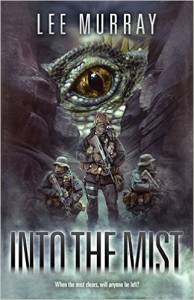
Yes, yes, I’m cutting it fine with the Festivus Book Pimping, but remember, as much as I love a print book (oooh, they smell so good!), ebooks are also damn fine presents. So kicking off today’s Festivus pimping is mutli-award-winning New Zealand author, Lee Murray, with her book Into the Mist.

RAWR!

Into-the-Mist-194x300

As you can tell from the absolutely kick-arse cover , Into the Mist, is a military horror creature-feature tale, but this one is set in the wilds of New Zealand with a creature ripped straight from Māori legend. It was very cool to read not only Murray’s vivid descriptions of the NZ back-country, but to delve into the culture and rites of a strong and proud people.

Into the Mist (Cohesion Press), follows NZDF Sergeant Taine McKenna and his squad as they escort a group of civilian contractors into the Te Urewera National Park. Not usually a job for the army, McKenna’s other task (off the books) is to find any trace of squad that had vanished while trekking through the National Park.

From the back-cover blurb:

Militant Tūhoe separatists are active in the area, and with its cloying mist and steep ravines, the forest is a treacherous place in winter. Yet nothing has prepared Taine for the true danger that awaits them … a prehistoric creature intent on picking them off one by one.

From the outset, you’re thrust into the action, and the tension Murray weaves throughout the story never lets up. With sub-plots woven perfectly through the tale, the reader is given a glimpse of the rich Māori history, and the struggles to maintain their culture and their land against those intent to profit from it. It’s brutal, it’s gory, and when the chase is on, your gut will be clenching right along with the soldiers and the civilian charges.

And this beastie? Oh, it’s smart, and it’s stealthy, and it’s impervious to the squad’s guns. And shoot it a lot… and you know that only makes the monster mad… and vengeful. Murray is a mistress of tension, and she will make you dance to her tune. I was enamoured with this book, but I grew up on stories of Māori legend via my father (he’s Pākehā, not Māori), so this was a real delight. And it’s wonderful to see diversity in fiction; the world needs more of it.

There’s also a glossary of Māori and local terms for those unfamiliar with the country and its culture, but the way Murray tells the story, understanding is a given.

Read this book you must. Give it as a gift you also must. But I guarantee it will be one you can’t put down. You can read a review of Into the Mist here.

Recommended for lovers of horror, military horror, creature-feature, and balls-to-the-wall fear-mongering. Yeah, this book has it all.

Go, now, Festivus Into the Mist, you won’t be disappointed.

RAWR!

Festivus Book Pimping – The Vengeance Trilogy by Devin Madson

It’s that time of year again, folks, and what better present is there to give someone than books. BOOKS, I TELLS YA! So in the lead up to Christmas, I’ll be pimping books and series that have impressed me, and would make great gifts and stocking stuffers. Support authors!

Now before we go any further, the path to Festivus is a shadowed one. On it you will find only those tales that sit on the darker side of genre fiction. Watch your step.

*claps hands* Alrighty then. Let’s get started.

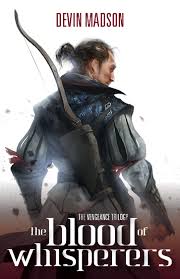
First off the Festivus ranks is Devin Madson’s amazingly epic The Vengeance Trilogy.  Set within the pseudo-Japanese empire of Kisia, the series is told by Darius Laroth, Hana Otako, and Endymion as they’re embroiled in the fight for the Crimson Throne. While these three tell the story, it is also the tale of Katashi Otako (Hana’s cousin), Malice (Vice Master and Darius’s half-brother), and Emperor Kin – all want different things from the empire, and fight they must. Fight or die.

The first in the series – The Blood of Whisperers – introduces the reader to the players vying for control of Kisia. From the back-cover blurb:

They call him the Usurper. A man of common blood sits upon the throne. By his command the last emperor was executed, but now the empire is on the brink of war. Vengeance is coming.

BoW

The next in the trilogy is The Gods of Vice. Here, we delve more into the unique magic system Madson has created for this world, and where betrayal and political manoeuvrings mean no one is safe. From the back-cover blurb:

Two emperors. One empire. The war for the Crimson Throne has split Kisia. The storm is coming.

GoV

And the final in the trilogy has just been released. The Grave at Storm’s End is a powerful last book in the series, where none of the characters will ever be the same, and as a reader, you won’t either. From the back-cover blurb:

Vengeance has come. Katashi Otako walks with the Vices, burning everything in his path. Now the spirit of Vengeance, he will stop at nothing to destroy Emperor Kin and take the Crimson Throne. When gods fight, empires fall.

gse


There is no doubt in my mind that Madson is an author to keep an eye on. Her writing is beautifully crafted, and her imagery the stuff of wonder. The Vengeance Trilogy is one of the best fantasy series I’ve read in a really long time, and one that holds pride of place on my bookshelf. Oh, and those covers are just gorgeous.

All of the books are available from Madson’s website, and come perfectly wrapped for Christmas. You can’t go wrong as a gift.

Recommended for readers of fantasy, dark fantasy, epic fantasy, political intrigue, and characters that will stay with you long after you’ve closed the book.