Festivus Book Pimping: Primordial by David Wood and Alan Baxter

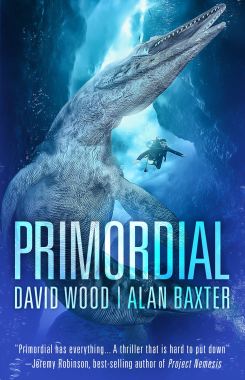
All right, who wants monsters? And here I’m talking monsters-of-the-deep variety. You do? Excellent! Well, have I the pimp for you! Book pimp, I mean, not… moving on. So, this monster thing I was talking about before you all fell into the gutter, is of the ancient ilk. Primordial, in fact (see what I did there?). And it’s of the big bitey kind.

Primordial by David Wood and Alan Baxter is a ‘creature feature’ novel with the search for a monster purportedly living in a Finnish lake. The book follows Australian marine biologist Sam Ashton, who take on the job of scientific sceptic for billionaire-come-batshit-crazy-dude, Ellis Holloway. Along for the ride is a documentary team, led by Joanne Slater; Holloway’s bodyguard, and a local fisherman. On shore, (yes, they get to shore), is local historian Old Mo, who keeps the legend of Lake Kaarme alive.

This book contains myths and legends, nods to Hollow Earth, Jurassic Park, and a little bit of Jaws thrown in to get the pulse racing in those underwater scenes (swim faster, you fools!).  There’s a lot going on in this story, and the authors take the readers on quite the ride… swim… boat… (shut up). There’s horror, suspense, some gore, a little bit of bow-chicka-wow-wow, but this is a slick novel that will have your pulse racing.

Back-cover blurb below:

Sometimes, the legends are true. When eccentric billionaire, Ellis Holloway, hires renegade marine biologist, Sam Aston, to investigate the legend of a monster in a remote Finnish lake, Aston envisions an easy paycheck and a chance to clear his gambling debts. But he gets much more. There is something terrible living beneath the dark waters of Lake Kaarme and it is hungry. As the death toll mounts, Aston faces superstitious locals, a power-hungry police chief, and a benefactor’s descent into madness as he races to find the legendary beast of the lake.

Primordial-full

(Killer cover by the uber-talented Dean Samed of Neostock.)

Buy this book for someone you love, or don’t love, or like a lot or just a wee bit. Look, this is an excellent read with a tight plot, excellent characters, and a monster that will make you wet your pants*. You can’t go wrong.

Recommended for lovers of horror, suspense, creature-feature stories, big-bitey things, legendary creatures, cryptozoology.


* No pants were soiled in the reading of this book.  

Festivus Book Pimping: Red Queen’s War trilogy by Mark Lawrence

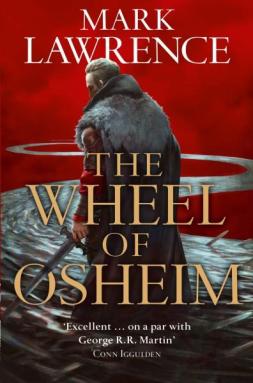
Hear ye! Hear ye! Second in the most Festivus of Book Pimping is Mark Lawrence’s Red Queen’s War trilogy. It was The Wheel of Osheim, the last in the trifecta, I read this year. This book also has the honour of being the first story I read on my kindle (I have the paperback also, because having only two books of a trilogy sitting in my bookcase makes me twitch – it ain’t pretty).

The Red Queen’s War trilogy is the second in Lawrence’s grimdark series – the first being The Broken Empire trilogy, but there’s no need to read that first as while there is a most excellent crossover in the second series, each trilogy stands alone.

Right then, trilogy equals three books: Prince of Fools, The Liar’s Key, and rounding it out is The Wheel of Osheim ­‒ a hell of a tome. Like, doorstop size. Makes sense, there’s a lot to tie up in the final book of a trilogy.

So, what’s this about? I mentioned grimdark earlier, and while there’s always some debate as to what that is, I think the most simple explanation is a story that doesn’t pull punches when it comes the darkest depths of human behaviour. Unapologetic characters who do what they must to survive, to thrive, and let the consequences fall where they may. Redemption? Pfft, spit that from thy mouth!

Don’t ever go into Lawrence’s books looking for a rainbows and unicorns and elves and shit – fantasy this may be, but these worlds are filled with darkness and the dead. It’s really kinda cool. The Red Queen’s War trilogy borrows heavily from the Norse mythos, especially with one of the two main characters: viking Snorri ver Snagason – warrior bard. Snorri holds his own (and then some) with Prince Jalan Kendeth – craven tart. They make quite the pairing. It’s magic that tethers the two together, and ultimately what may tear them, and the world, apart.
the-wheel-of-osheim

I could go on, but here are the back-cover blurbs for each, which are far more succinct than my ramblings above.

Prince of Fools

The Red Queen is old, but the kinds of the Broken Empire fear her as they fear no other. Her grandson, Jalan Kendeth is a coward, a cheat and a womaniser; and tenth in line to the throne. While his grandmother shapes the destiny of millions, Prince Jalan pursues his debauched pleasures. Until he gets entangled with Snorri ver Snagason, a huge Norse axe man, and dragged against his will to the icy north. In a journey across half the Broken Empire, Jalan flees minions of the Dead King, agrees to duel an upstart prince names Jorg Ancrath, and meets the ice witch, Skilfar, all the while seeking a way to part company with Snorri before the Norseman’s quest leads them to face his enemies in the black fort on the edge of the Bitter Ice.

The Liar’s Key

The eyes of the mighty are on the North. Loki’s key has been found and lies in the hands of a feckless prince and broken warrior. Winter has locked Prince Jalan Kendeth far from the luxury of his southern palace. The North may be home to the viking, but he is just as eager to leave. However, even men who hold a key that can open any door must wait for the thaw.

As the ice unlocks its jaws, the Dead King moves to claim what was so nearly his. But there are other players in this game, other hands reaching for Loki’s key. Jalan wants only to return to the wine and women of the south, but Snorri aims to find he very door into death and throw it wide. The warrior will challenge all of Hell, if that’s what it takes to bring his wife and children back to the living world. He has found the key – now all he needs is to find the door.

The Wheel of Osheim

All the horrors of Hell stand between Snorri and the rescue of his family, if indeed the dead can be rescued. For Jalan, getting back out alive and with Loki’s key is all that matters. Loki’s creation can open any lock, any door, and it may also be the key to Jalan’s fortune back in the living world.

Jalan plans t return to his debauched life of wine, women and wagering. Fate, however, has other plans. Larger plans. The Wheel of Osheim is turning ever faster, and it will crack the world unless it’s stopped. When the end of all things looms, and there’s nowhere to run, even the worst coward must find new answers. In the end, it’s win or die.

Look, I can’t recommend these books enough. I once described Mark Lawrence thusly: thief of slumber, time trafficker, broker of the dawn. Once you start with the man’s books, you’re so immersed in the story that your idea of half an hour reading before hitting the sack turns into hours that no amount of coffee can fix the next morning (adulting be hard).

If that isn’t a hell of a selling point, I don’t know what is.

Recommended for readers of fantasy, dark fantasy, horror, grimdark, stabby-stabby, and dead things – there’s a whole lot of dead things.

 

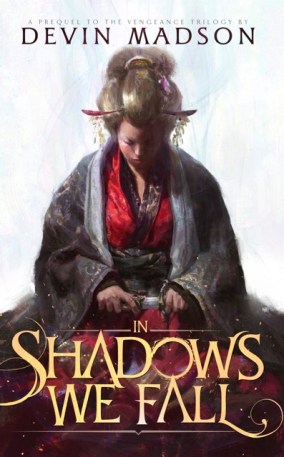
Festivus Book Pimping: In Shadows We Fall by Devin Madson

It’s time! Festivus Book Pimping for 2017 is here! Damn right I’m excited. This is where I get to pimp the books I’ve enjoyed this past year, give you some recommendations, and hopefully have you fine folk make an author very Festivusy (so a word) by buying their book. It’s a win-win! Or… a win-win-win, perhaps.

Kicking the Pimping of the Books of the Fesitvus off is In Shadows We Fall by Devin Madson. This book is a novella-length prequel to Madson’s Vengeance Trilogy (pimped here), there are no spoilers for those who have read the trilogy, and you don’t need to have read VT to enjoy this tale. And enjoy it you will.

Madson has a knack for creating characters that are not only well-rounded but also on the grey side. While this book skirts the boundaries of full-on grimdark, it so beautifully dips it toes into the genre that if you’re a fan of stories that blur the lines between light and dark then this tale is definitely one you should pick up.

Set in a pseudo-feudal-Japanese world, the Kisian empire is on the brink of war, held together by fragile threads. Nothing is ever what it seems in Madson’s books, and she doesn’t disappoint here. The language is beautiful, the rituals and ceremonies befitting when gods sit on thrones. The Eastern-flavour of this universe is refreshing, and the setting and imagery comes to life on the pages.

Blurb:

You will die. Your children will die. The empire will burn,

Empress Li is out of favour at court. Foreign-born and past her prime, she is to be set aside. But she won’t go quietly. With nothing left to lose, Li will do anything to stop Emperor Lan signing a secret alliance that could tear the empire apart. Yet when her life is threatened, old mistakes come back to haunt her and only a three-year-old boy can change the course of history.

With everything at stake, could an innocent child be the best assassin.

Shadows


And you can’t go past that cover. This is original artwork created for In Shadows We Fall, and artist John Anthony Di Giovanni has produced a thing of beauty that captures the essence of Empress Li. There’s always something special about covers that contain original artwork, and Madson’s cover is why.

On a Goodreads scale, I give In Shadows We Fall five stars.

Recommended for readers of fantasy, dark fantasy, political intrigue, stabby-stabby, killer magic systems.

You can read In Shadows We Fall free if you sign up to Madson’s newsletter (an ebook copy of the story will be sent to you).  You can also purchase ebook and print from the website here, or you can purchase from Amazon or wherever you buy your reading.

Cover art: John Anthony Di Giovanni

Cover design: Shawn King

FESTIVUS BOOK PIMPING COMING SOON

Yes, folks, we’re edging toward that time of year. If you’re like me, the idea of heading into those outside places with those outside people and running the gauntlet of shoppers as I try to find gifts, brings not so much Christmas cheer, but Christmas jeer. Or beer. Yeah, beer would be good.

Aaanywho, for those of you who are readers, or know readers, or love readers, or can’t think of a present for a family member, a friend, a work colleague, or even your drunk Uncle Dave, fear not! From December 1, I will be reviving Festivus Book Pimping. 

As the name suggests, I will be pimping books I’ve read* and those I’ve worked on, and giving a small breakdown of what each entails, and who they’d suit. Be warned, though, if it’s romance you’re after… well, at least you’ll get to see some great covers.

Books are amazing gifts. They ignite the imagination, they can take you to different worlds, and have you live different lives. And as a present, there’s not much better than that. Except kittens. And puppies.**

All right, buckle up mofos, Festivus Book Pimping will be landing soon!

book imagination

* This is not a call out for reviews or ‘read my work!’ ‒ stay classy, people.

** Kittens and puppies are for life, not just Christmas ‒ don’t be that asshat.

The stories that keep on giving

Writers will tell you nothing much beats publication – be it a short, novella or novel. Signing that contract, getting paid (yes, you should be paid for your work), and having your story out in the world is like crack.

But what happens to those babies once they’ve flown the nest and found new homes? After a given time, well those babies come back. Most will stay filed away, but never underestimate their chance to fly off again and find new homes, new readers.

Reprint markets. Oh, they are wonderful things. One of my babies has found a new home with Digital Fiction Publishing League. Unlike children (real, human-like ones) there are a few stories of mine that are favourites, and The Whims of my Enemy is one of them. It’s a brutal story, unforgiving to all the characters within, but more so with the main protagonist. Hers is a torturous ride, filled with violence and weighed against the desperate need to survive, and what that survival may cost.

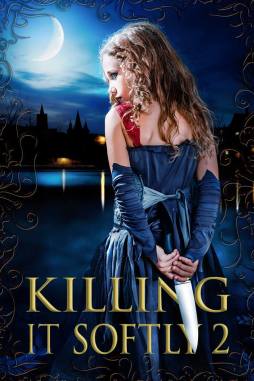
Killing it Softly 2

It seemed a good fit for Killing It Softly 2: a fiction anthology of short stories (the best of women in horror). It’s quite the title, and the editors at DFPL were not only kind enough to accept ‘Whims’ but made it the lead story in the antho, which I was extremely chuffed with. There are some fantastic authors I’m sharing the pages with, and it’s one hell of a tome. Thirty-eight stories that run the gamut of all things horror.

Here’s the blurb:

The first ‘Killing It Softly’ was just the tip of the iceberg…

Beneath the icy depths of this next installment, you’ll be plunged into a world where 38 female horror writers give you a glimpse of their inner-demons, unleashing the hell-fire they suppress in the ‘real’ world. It will disturb you to discover what really lurks inside their minds, because many of these stories delve into pain that can only be experienced by women—leaving you unhinged as you curl up with them during their darkest hour.

Post-partum depression, hording, anorexia, and mental health will be brought to light when viewed through the shadowy perspective of cognitive deception.

Sci-fi, romance, steam-punk, and fantasy intertwine with horror to deliver unsettling, chilling stories; traditional tales of witches, zombies, werewolves, and vampires will be told in twisted new ways that will shock, unnerve, and even repulse you…and within these pages, sometimes new monsters will arise from the ashes.

You may even discover that women can not only write good horror…but in some cases, can do it better.
So if you’re of a mind, and looking for some killer short stories to while away the hours, then check out Killing It Softly 2 ­‒ there’s a little horror out there for everyone.

And for you writers out there, remember there is more than one life to the stories you’ve sent out into the world. Let those babies fly again!

Writers, Retreats, and Insane Asylums

It’s been just over a week since I returned from a Writer’s Retreat held at Mayday Hills Lunatic Asylum at Beechworth. Yep, you read right – a writer’s retreat held at an old insane asylum. It was as awesome as it sounds. Five days sequestered with other writers in a hauntingly (and quite possibly haunted) beautiful asylum is the stuff of inspiration. And personing. I did a whole lot of personing.

What made this doubly excellent was the other writers in attendance, all but one of whom were very close friends, so it was a catch-up of epic proportions. This also meant that we were all comfortable throwing around ideas and points of view, and engaging in general shenanigans. But we were there to write, to have that uninterrupted time some of us seldom get when at home. And it was glorious.

Writing is often a solitary endeavour where you live in your created worlds among created people. But put a bunch of writers together, and it’s a whirlwind of book discussions, plot summaries, story ideas, and why synopsis writing is the tenth circle of Hell. There’s joy in this cacophony; the rise and fall of voices, the quirks and strange paths conversations take that would make no sense to non-writerly folk but which feeds the soul and the muse of those who bleed ink. They will tell you why your story necessitates the killing of a character (beloved or otherwise) then offer a plethora of options on how to do so that would land them on any federal watchlist.

Just being among fellow scribes is enough to invigorate, enough to drown out that writer-imposteritis but we were also fortunate enough to have the wonderful pocket-rocket Kylie Chan providing workshops all through Saturday, which were fantastic, but always there was time to write. There’s not a lot better than sitting in a nicely heated room listening to the clack of keys in the silence as worlds and people are created – individual galaxies within a shared universe. It’s kinda cool.

But when we weren’t writing, there were historical tours of the asylum, and one very late night there was also a paranormal investigation. As much as I would have liked to go on the paranormal investigation, when it’s -4˚ outside… well, I’m staying where the heat is. Those that took up the challenge had a great time despite the sub-zero temps.

We ate, slept and created together… wait, let me rephrase. Look, we bunked down in the same room, wore pretty much all the clothes we’d brought with us when it was time to venture outside – hell, I even wore my slippers out to dinner because damn it was cold. We took the piss out of each other, we laughed, and we revelled in our own and each other’s weirdness.

And the location was everything. The asylum has a melancholic beauty about it.  The history is both shocking and sad, with desolate and worn-down buildings that hold memories that are like scars. For my mind, pain and suffering has a tendency to linger, to echo long after people are gone, and I don’t doubt there is fear and horror etched into some of the walls, the cells of the asylum.

IMG_20170827_220119_resized_20170827_100137334

Too soon the time was over, and I had to take a tiny plane home, but those five days were like manna from heaven. I came away with so much more than just a honed story premise and structural architecture (and glow-in-the-dark skeletal gloves), but a renewed vigour for writing. I can’t wait to go again next year. And I can’t thank all the people involved enough, but let me try.

To Geoff and Dawn for organising and running the reatreat – you two work immensely hard not only on Asylum Ghost Tours but Cohesion Press as well. You two rock. (Special shout out to Mandy and Leah for all they did over the five days as well.)

Now I’m going to list the writers at the retreat – they are an amazing bunch and you really should be reading their work. They’re incredible and diverse storytellers, and there should be something in here for everyone.

Kylie Chan

Devin Madson

Marty Young

Andrew McKiernan

David Schembri

Fiona Shearer.

And for all those writers out there, find a retreat, a place that evokes inspiration and puts you around others who not only share your passion to create, but will encourage and badger you to do so.

Whispers in the Void

A couple of months ago, Mark Lawrence launched this year’s Battle of the Bards competition ‒ write a flash fiction piece (300 words or fewer), for a chance to win signed books from some of the giants in the grimdark/fantasy genre.

My friend, Devin Madson, won that comp with her incredible piece ‒ Between Lanterns and Corpses. It’s a brilliant story, and I was so chuffed she’d won. You can read it here, along with the short-listed entries. For those familiar with Devin’s work, this story is set within her Vengeance trilogy universe, and this post explains the origin of the winning flash piece. You should be reading her work, she’s quite the storyteller!

I, too, gave the competition a whirl, but alas, no free books. While a ‘loss’ in the literal form, it was a win in the time-to-write column. Yes, it’s only 300 words (good words, I think), but it was more the act of creativity that soothed my soul ‒ that’s always a win.

The story I wrote has also brought into sharper focus one of the characters of my WiP, so I’ve gained another win (two ticks in the win column ‒ I’m on a roll!). Writing tight forces those essential traits, the… trueness of a character and lets the world see it.

So, if you’ve read this far, then perhaps you can read another three hundred words.

Whispers in the Void

Wren knew this wasn’t the last of the dead they would stitch beneath her skin. This night the soothsayer would be forged into the finest jewel, and Wren would carry that hateful woman for all time. Already the sickly-sweet scent of roasting flesh clogged her throat.

Anointed in oils, Wren had been left to commune with the souls she carried, but never had their voices been quiet. Never had they let her be. Silence, how she craved it. Nights undisturbed. Days, her thoughts her own. But the people had cut and carved and delivered their dead ‘til she was a shadow within a shell. Infested. Infected. The slow death of self.

Escape was all she had. And freedom meant retribution. With no Journeywoman to replace Wren, the clan’s spirits would be unprotected. Ripe for the Undergod’s pickings.

Beneath the Spirit House, blisters bloomed on her skin as she dragged herself past the furnace where the soothsayer sizzled and spat. May the Undergod never shit you out. Wren stifled a cry; lances of fire a thousand-fold speared through her, the spirit-gems enraged at being so near their creators. Life-eternal they’d been promised, yet prisoners they’d become in an unwilling crypt.

They blazed their fury, but freedom meant pain. They would soon understand.

At the slag pit’s egress, the light of day stung her weeping blisters, and glinted off the jagged spears of metal below. Thousands of spirits she’d been burdened to carry. She would carry no more.

The drop from her perch was steep, and the dead began to beg. Without her, they were just whispers in the void.

Freedom beckoned. Her life her own, however fleeting.

No longer the caged bird she had always been, Wren smiled as she pushed from the edge, and for a moment, she flew.

raven

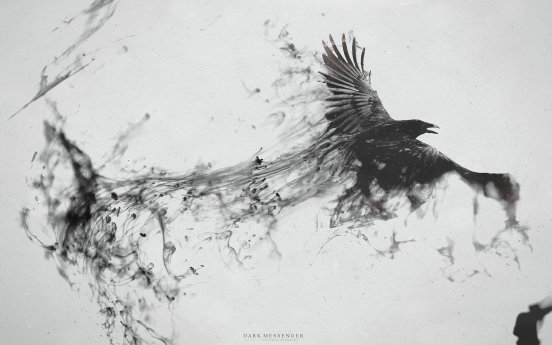
Art by: Dimitarsizce

Tag, you’re it.

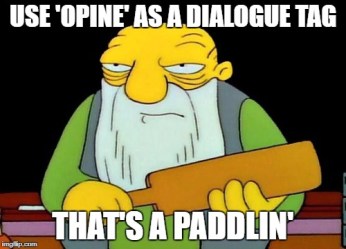
My absolute loathing of the dialogue tag ‘opined’ is no secret. (By all the gods, Baxter, if you start tagging me with that shit again, I will steal your dogs.) If you’re using ‘opined’, or another wankerish dialogue tag to push home to the reader some kind of pretentious point your character is making, then you need to take a look at your character’s dialogue because it should be pretty clear they’re voicing their opinion.

Dialogue tags serve a few purposes. For example, they identify the speaker, they break longer pieces of dialogue, and they can also be used to further enhance emotion. And yes, that third point should be used sparingly – if you can’t convey emotion through dialogue and action, then a dialogue tag telling the reader so, doesn’t really cut it.

Use ‘said’. Almost always use ‘said’. Of course there are going to be exceptions to this ‘rule’, but the beauty of ‘said’ is that it’s invisible. It ensures the emphasis is on the spoken word, on the emotions put forward within those words, and the honesty and/or sub-text behind it.

Dialogue is the voice of your characters, and I’m not just talking accents and inflections here, I’m talking a deeper sense of self. When a character speaks, they reveal a lot about not only themselves but the situation/scene they find themselves in (do not use ‘he/she revealed’, if the characters says it, trust me, it’s revealed). You don’t need a fancy-shmancy dialogue tag, it’s distracting, and removes focus from speech.

Sure, there are times when ‘said’ isn’t going to cut it, but choose words that impact the dialogue, eg. whispered, muttered, shouted, screamed. These dialogue tags up the ante, but use them sparingly or they’ll become repetitive. No, put down that Thesaurus – use ‘said’.

Opine

Same applies with ‘asked’. If there’s a question mark at the end of your dialogue, it’s safe to assume the reader understands a question is being posed – ‘asked’ becomes redundant (don’t use ‘posed’ either, that’s redundant as well).

Look, I understand there are a lot of ‘rules’ to writing and grammar and all that comes with storytelling, but as an editor and a reader, I’m telling you: let the dialogue do the work for you, and let the dialogue tag (if you need one) become invisible. It’s the characters’ voices we want to hear, not the way you tell us they spoke.

Show the reader through dialogue, through action. It falls in line with ‘show don’t tell’. You want the reader to know the character is angry? Don’t use: ‘he/she said angrily’, show us through the narrowing of eyes, the gritting of teeth, or punching a wall, for example. Then use ‘she/he said’. The emotion and/or sense the character is trying to put forward is far more visual, far more visceral, and the reader will be far more engaged than having a character opine at them (you use that, and I’ll cut you).

For a far more polite understanding of the above, check out Devin Madson’s vlog on this very subject: Almost Always Use Said, it has some wonderful insights as to why you shouldn’t fancy up your dialogue attributions.

So, the next time you’re writing dialogue, remember to make that attribution invisible so the voice of your character holds the power it should.

(Seriously, Baxter, I will steal your dogs.)

Character Motivation: May it Burn with the Fury of a Thousand Suns

Today’s post is brought to you by motivation. Mine, to actually write the post, and that of the characters you put into your stories – be they short stories or long. Characters are the heart of your tales, they’re who the reader connects with, and they must be on point. Motivation is key to bringing that connectedness to the fore.

Characters are also essential to driving plot, and every character you put into your tales (yes, every) needs to have motive. There needs to be a reason your protagonist makes the decisions they do, there needs to be intent behind your antagonist’s choices. The reasons and intent don’t have to be honourable or dastardly (gods, I love that word), and they don’t have to sit in neat little boxes ‒ protagonist = good, antagonist = bad ‒ they just have to be real. Flaws and all.

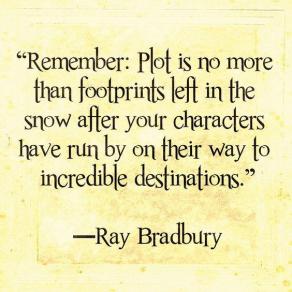
I couldn’t tell you the amount of times I’ve put down a book because the characters were wandering aimlessly looking for a plot, or waiting for said plot to impact them. It doesn’t work that way.  The story cannot act independently of the characters. You don’t read a story solely for plot, you read it for those who live, who try to survive the world you’ve created. Don’t sell them short.

Ray-Bradbury 1

So what is motivation? Merriam-Webster defines it as: a motivating force, stimulus, or influence. Incentive. Drive.

That. Right there. ↑ Now ask yourself: what is the incentive, the influence that drives your character(s)? It’s that inner motivation, that sense of self that impacts the plot, the story. And will continue to do so. Every decision (good or bad) your characters make will influence the story – some of these decisions may essentially backfire, but there’s nothing wrong with that. Nothing should be easy.

Motivation doesn’t need to be complex, it can be simple but it needs to be that driving force. Yes, FORCE. Motivation can be: you killed my family, payback’s a bitch. Simple, yes? But the depth comes in the decisions and choices your character makes to achieve this end.

Let’s take a look at how this works. Your protagonist, now alone in the world, is driven almost blindly for retribution. Do you: a) have them stumble across a magical object that by chance provides them with the exact location of the antagonist and off they go? Or b) have them make a pact with a shifty character whose motivations, while at odds with their own, can get them closer to their target ‒ but in doing so compromises the protagonists morals?

You know which one I’m reading. Character motivation can (and should) cause all kinds of issues that influence plot/story. Characters are the driving force behind your storytelling, and what motivates them is what will connect to the reader. Give them lives and loves, sins and secrets, and have all of that be the heart of your story.

Motivation and conflict of that motivation is what can make a good story great. Don’t waste time on overly-detailed physical descriptions. Sure, physicality is important to a point – it’s nice to know what a character looks like, but is it essential to the story? Rarely. Ah, but give conflict to motivation and you really set the bar high.

So your antagonist has green eyes. Cool. Does she burn with the fury of a thousand suns because your protagonist was born into a family that subjugated hers? Your protagonist has hair the colour of silver? Nice. Does she practice her fighting skills to the point of exhaustion to not only kill the antagonist who wreaks havoc on the realm’s stability, but to take her place and destroy the father she hates?

You see where I’m going with this? By giving your characters motivation to achieve their ends, by adding conflict to that motivation, you make them real to your reader, you make them believable, and you create a story that has depth and layers and soul. It’s what brings readers back to your writing.

Motivation. It makes all the difference. Have it make the difference in your story.

Movie Review: Train to Busan

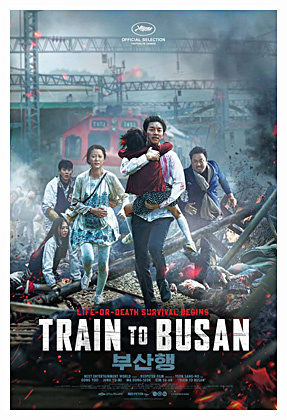
It took me longer than it really should have to get around to seeing Train to Busan, and it wasn’t until I finally sat down to watch it that I realised how big a mistake that wait was. I’m a huge fan of zombie apocalypse films and when the first trailer dropped I was hooked. Then as tends to be the case, life happens, and it fell off my radar.

It wasn’t until a friend posted they’d bought a copy that I hunted it down on cable TV. Train to Busan was everything I hoped it would be and more. It hits all the right marks when it comes to horror, action-thriller, and zombies. It’s a slow burn at the beginning, introducing the main characters, setting up the premise and foreshadowing the virus that will come to destroy South Korea, but it soon kicks up the pace and ramps the tension.

SPOILER ALERT IN ALL ITS SPOILERY-NESS. READ ON AT YOUR OWN SPOILERY RISK.

Now before I go on, I’ve said before that I’m no movie aficionado – I just know what I like. So it’s on that alone I’m basing my review. Alrighty then, let’s get this show on the road… or tracks…

train-to-busan

Train to Busan follows the story of Seok-woo, a divorced fund manager who works long hours while trying to raise his daughter, Soo-an. For her birthday, she finally convinces him to take her to see her mother in Busan. He doesn’t want to go, but his mother convinces him he must take her (just an aside, the last phonecall between the two is very cool). On the drive to the station, it’s clear some major shit is going down ­‒ ambulances and fire trucks are screaming past ‒ but the pair seem relatively safe. Once on the train, however, and just as the doors are closing, a young woman stumbles into one of the carriages with a bite wound to her leg.

And so begins the journey.

We’re introduced to the rest of the cast – a married couple expecting their first child, a baseball player and his cheerleader love interest, two elderly sisters (brilliantly played), a rich CEO, and the train driver (minor though his role is, hero he remains).

It doesn’t take long for the infection and the attacks to begin, slowly working their way through the carriages. These zombies are hard-core eating machines that move with speed, and in the confines of a train make survival all the more difficult. It soon becomes clear to those on the train that some bad, bad shit is going down outside, although most are unaware of the infection spreading inside, pretty much until it’s too late.

While most of the film takes place on the train, one pit-stop at a purported safe zone doesn’t end well for a lot of the passengers. Numbers are whittled, and characters are separated­‒ Seok-woo from his daughter, husband and pregnant wife, the sisters, and the baseball player and his new girlfriend. They have to fight through a number of zombie-infested carriages to reach their loved ones.

There’s something about horror set on trains that amps up tension – confined spaces, no way to get off, not in control of your destination. The claustrophobic feel of it lends itself well, and here is no different. It also brings out the true nature of the passengers, and what some will do in their quest for survival. Do you try to save who you can? Or, do you sacrifice others for your own survival? We see both sides of this with the remaining characters, and there are some brilliant scenes that showcase the decisions the characters make.

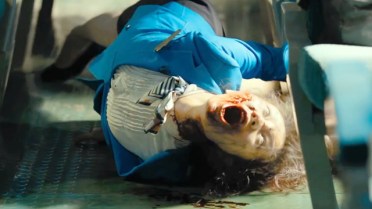
The two elderly sisters’ relationship is one of the most touching. Grouchy and sarcastic with each other, they are the most fun to watch, which makes the death of one (watched in all its gory glory) so traumatic. It’s here we really see the choices made, and the surviving sister understanding the wrongness of kicking uninfected passengers out of a safe carriage, sets things (almost) right.

TraintoBusan_zombie

Sacrifice is the name of the game here, and it’s not until very close to the end that we understand Seok-woo (and his company) are the harbingers of what is happening. There are no happy endings here. There is survival, but at what cost? And it’s that social commentary, woven expertly through the storyline without it being didactic, that gives Train to Busan its heart.

For those of you who balk at foreign-language films because you think subtitles take away from your viewing pleasure, put that aside and watch this movie. I had (and have) no issues with it, and it in no way lessened my appraisal.  Director Yeon Sang-ho delivered a film that entertains and makes you think, it makes you question: what would I do? The zombies are fast and voracious, single-mindedly focussed on “food”, and damn well everywhere. Excellent stuff.

For me, it’s one of the better zombie movies I’ve seen in a very long time, and if you haven’t got around to seeing it, you really should make the effort.

I give it 9 out of 10.